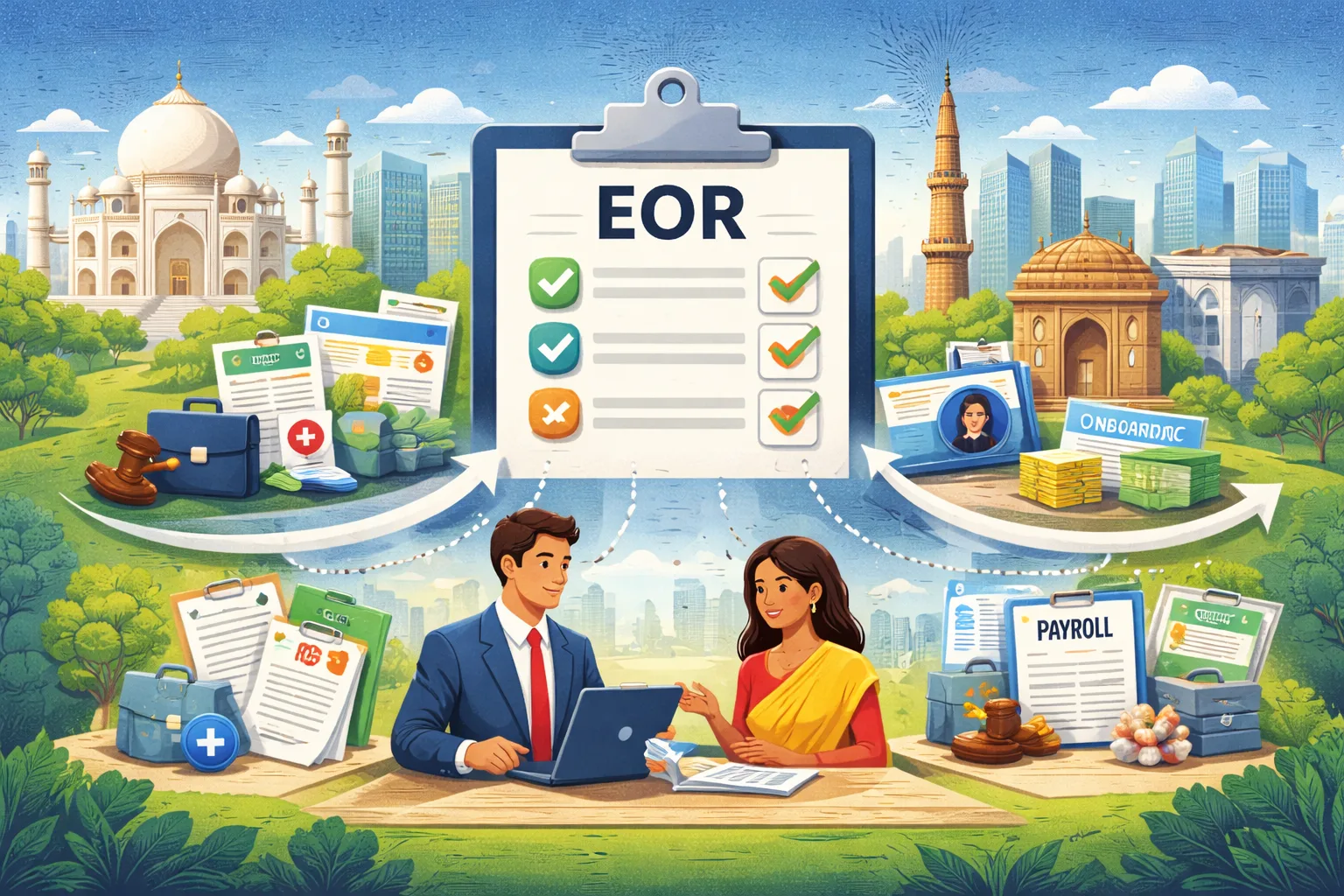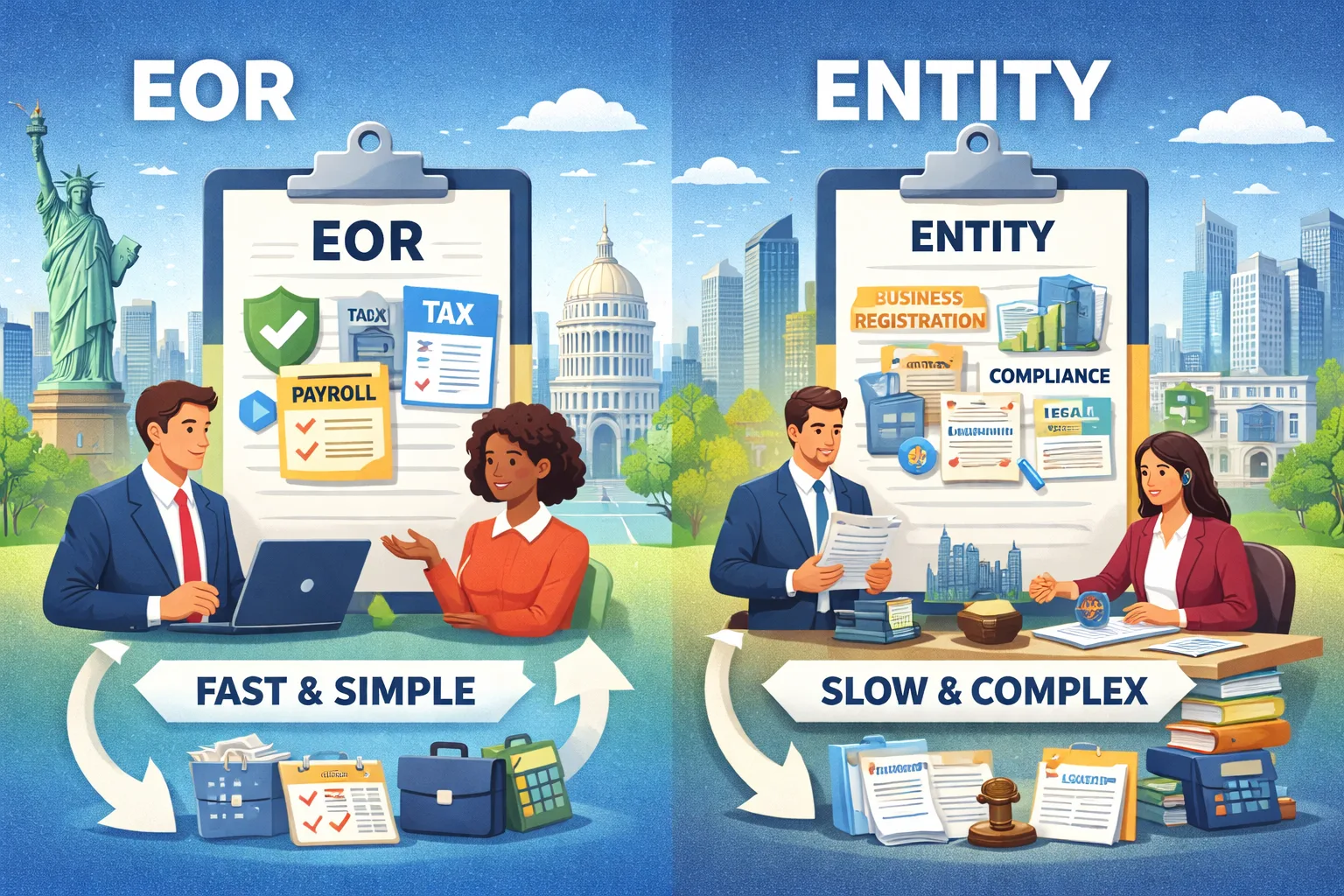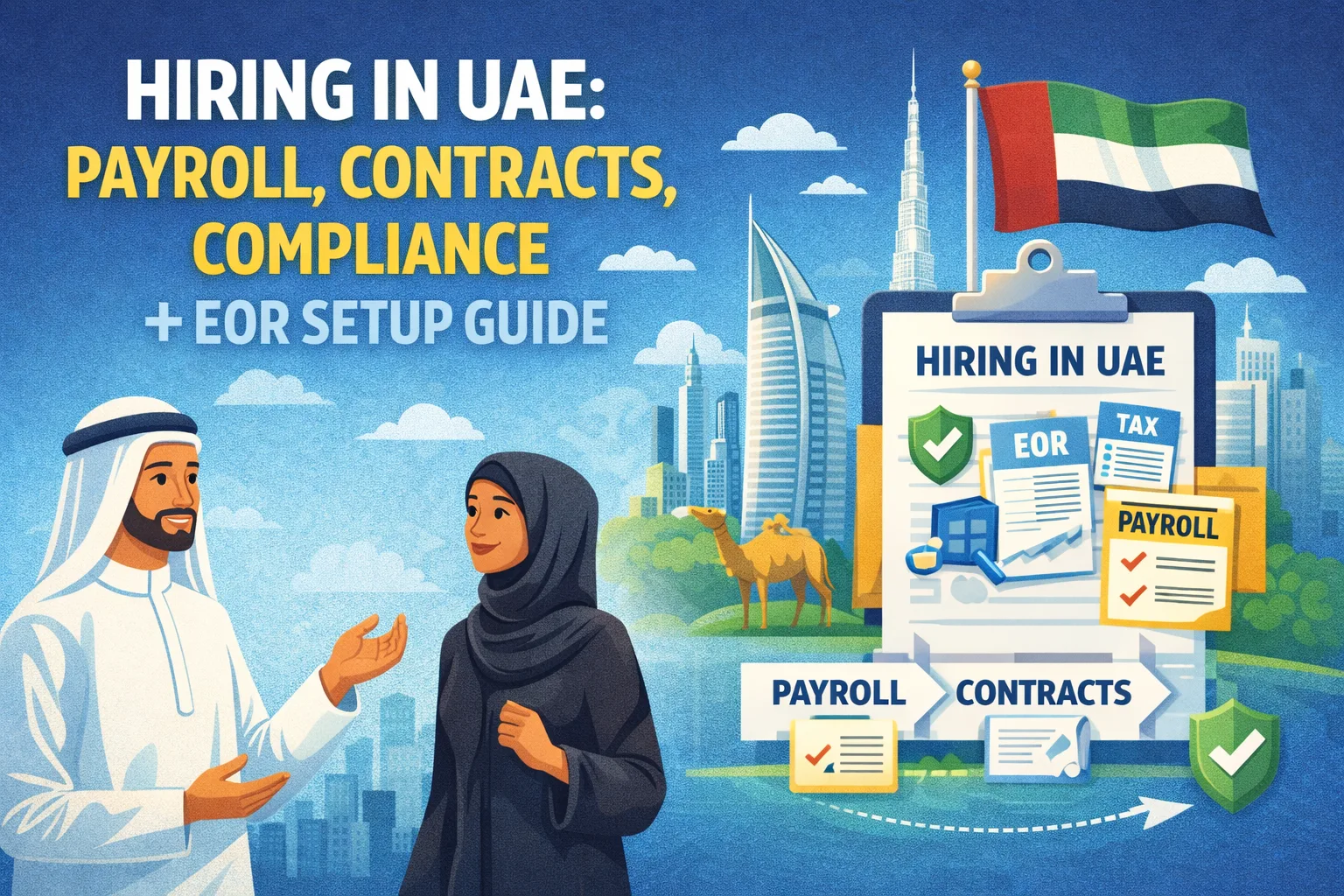

Hiring globally sounds like freedom.
You get access to better talent, faster expansion, and teams that work across time zones.
But here’s what most companies discover after their first international hire:
Global payroll isn’t “just sending salary.”
Each country has different rules for:
- payroll cycles
- employee tax deductions
- payslips and documentation
- statutory benefits
- leave policies
- employment contract compliance
- termination rules
And global compliance isn’t something you can “fix later.”
Because once payroll starts running incorrectly, the cleanup becomes expensive.
This blog gives you a practical, no-fluff checklist to manage:
✅ international payroll
✅ compliance
✅ HR documentation
✅ risk prevention
✅ hiring workflows
And if you want a smoother way to handle this end-to-end, we’ll also explain how Employer of Record (EOR) helps.
Quick Definition: What is International Payroll Compliance?
International payroll compliance means paying employees in different countries while following each country’s rules for taxes, benefits, documentation, and labor laws.
Compliance includes accurate payroll processing, proper employment contracts, statutory deductions, and employee benefits—done legally and on time.
Why Global Payroll + Compliance Becomes a Problem Fast
Most teams start global hiring with the best intentions:
- “We’ll figure payroll out monthly.”
- “We’ll pay them as a contractor for now.”
- “We’ll use the same contract template.”
And then reality hits.
Common global payroll issues include:
✅ 1) Incorrect salary structure
Different countries expect different salary formats and statutory deductions.
✅ 2) Missing statutory benefits
In many countries, benefits aren’t optional—and not providing them creates compliance risk.
✅ 3) Contract misalignment
A “one-size-fits-all contract” can break compliance immediately.
✅ 4) Wrong employee classification
Hiring full-time employees as contractors can lead to misclassification risk.
✅ 5) Unclear leave policy + HR policies
Payroll compliance isn’t just pay. It includes leave calculations and employee rights.
That’s why global payroll is a system, not a single task.
International Payroll & Compliance Checklist (2026)
Here’s the checklist you should follow before you onboard even one international hire.
✅ A) Employment Setup Checklist (Before You Hire)
1) Confirm how you’re hiring
Choose one hiring model:
- EOR (Employer of Record)
- entity setup (your own company locally)
- contractor (only if truly freelance/short-term)
2) Confirm role + working arrangement
Document:
- work hours expectations
- reporting structure
- work location
- job scope and responsibilities
3) Define compensation structure clearly
Include:
- base salary
- variable pay (if any)
- bonus structure (if any)
- payment frequency
✅ B) Contract & Documentation Checklist
4) Ensure country-compliant employment contracts
Your contract must match local requirements like:
- probation terms
- notice period
- termination clauses
- employee protections
- benefits mentions
5) Store onboarding documentation properly
Create an onboarding folder workflow that includes:
- signed offer/contract
- employee ID documents (as required)
- payroll details
- policy acknowledgements
6) Create a standard onboarding process
Your onboarding should include:
- welcome call
- laptop/access setup
- HR documentation
- first-week plan
Even global hires want structure—not chaos.
✅ C) Payroll Processing Checklist
7) Decide payroll timeline and pay schedule
Many countries have strict expectations for pay cycles.
Your payroll needs:
- clear salary cut-off date
- defined payout date
- payslip issuance
8) Payslips + salary breakdown
Your payroll process should support:
- payslip generation
- transparent breakdowns
- compliant deductions (where applicable)
9) Ensure accurate deductions and contributions
Depending on the country, deductions may include:
- taxes
- social contributions
- statutory employer payments
- other mandatory contributions
This part is where manual payroll setups fail the most.
✅ D) Benefits & Leave Compliance Checklist
10) Benefits coverage clarity
Before onboarding, confirm:
- what benefits are mandatory
- what benefits you will offer additionally
- how enrollment works
- whether insurance is included
11) Leave policy compliance
Leave is one of the biggest compliance gaps globally.
You need defined rules for:
- annual leave
- sick leave
- public holidays
- parental leave
- leave tracking workflow
12) Employee experience and retention check
Compliance aside—benefits and leave also impact retention heavily.
If international employees feel “unsupported,” churn increases.
✅ E) Ongoing HR Compliance Checklist
13) Maintain employee records properly
Keep records for:
- contract updates
- promotions/salary revisions
- policy changes
- performance documentation
14) Have a clear process for exits
When an employee exits, you need to manage:
- notice period
- final settlement
- documentation and compliance steps
15) Track compliance changes
Regulations change often. Your global employment setup must stay updated.
This is why companies prefer EOR—because compliance updates are handled centrally.
Biggest Global Payroll Risks (And Why They Cost More Than You Think)
Let’s talk about the risks that actually hurt companies:
❌ Misclassification risk
A “contractor” who works full-time like an employee can create problems later.
❌ Payroll errors and delayed payments
Late salaries instantly break trust.
One payroll delay can hurt retention badly.
❌ Compliance penalties
Non-compliance can lead to:
- fines
- back payments
- legal escalations
❌ Employee dissatisfaction
If benefits, leave, and payroll feel messy—employees disengage quickly.
H2: How Employer of Record (EOR) Makes Global Payroll Easy
This is where EOR becomes a simple solution.
With EOR:
✅ you don’t need local entities
✅ the EOR becomes the legal employer
✅ payroll + taxes + compliance are handled
✅ benefits and leave are aligned locally
✅ onboarding is structured
✅ employee experience improves
Instead of trying to build global payroll workflows country-by-country, EOR gives you one streamlined system.
How Much Does It Cost to Manage International Payroll Properly?
If you build payroll internally, costs include:
- payroll vendors
- compliance consultants
- HR admin workload
- legal reviews per country
If you use EOR, typical pricing is:
✅ $200–$800 per employee per month
(depending on country + benefits + complexity)
That cost often ends up being cheaper than the combined cost of entity setup + ongoing compliance overhead—especially for smaller teams or early expansion.
Why Companies Choose ezyHire for EOR + Global Payroll Compliance
When you want global hiring to feel simple, you need a partner that handles the full picture.
With ezyHire’s Employer of Record (EOR) services, you get:
✅ payroll + taxes handled end-to-end
✅ benefits + insurance support
✅ leave management
✅ onboarding support
✅ HR compliance handled across countries
✅ coverage across 130+ countries
✅ transparent pricing + tailored solutions
So your global workforce feels “future-ready” while you focus on growth.
Want Global Payroll Without Compliance Stress?
With ezyHire’s EOR services, we take care of:
✅ contracts
✅ payroll + taxes
✅ benefits + leave
✅ compliance + onboarding
So you can focus on scaling your team globally—with peace of mind.
👉 Get Started with ezyHire EOR Services
Internal Link (Supporting Blog Cluster)
If you’re planning international hiring without setting up entities, read this next:
👉 How to Hire Employees in Another Country Without Setting Up a Company
(Internal link to Blog 3)
FAQs — International Payroll & Compliance
1) What is international payroll compliance?
It’s paying employees in different countries while following local payroll, tax, benefits, and labor regulations.
2) Why is global payroll difficult?
Because every country has different rules for deductions, benefits, contracts, and documentation.
3) What happens if payroll compliance is missed?
Companies risk penalties, legal issues, employee dissatisfaction, and operational disruption.
4) Can I run payroll internationally without setting up entities?
Yes. You can use an Employer of Record (EOR) to hire and run payroll compliantly without entity setup.
5) Does an EOR handle benefits and leave policies?
Yes. EOR providers typically support benefits administration and compliant leave policies.
6) How much does it cost to use an EOR for global payroll?
Typical EOR pricing is $200–$800 per employee per month depending on country and scope.
7) Do I manage the employee if they’re hired via EOR?
Yes. You manage all daily work, performance, and reporting. The EOR manages legal employment and payroll.
8) Is EOR better for startups hiring internationally?
Yes—especially when startups need speed, lower overhead, and compliance confidence.
Global hiring is amazing—until payroll and compliance start slowing you down.
If you want international payroll to run smoothly, compliantly, and without constant follow-ups:
✅ ezyHire EOR services make it effortless.