
If you’re hiring someone in another country, you’ve probably hit this moment:
You found the right person.
They’re excited. You’re ready.
And then the real question shows up:
“How do we hire them legally without setting up a company there?”
That’s exactly where EOR services come in.
In 2026, businesses are moving faster than ever—hiring across time zones, building distributed teams, and opening new markets without waiting for the “traditional expansion playbook.”
But global employment still has a lot of moving parts:
- contracts
- payroll rules
- taxes
- benefits
- compliance
- leave laws
- onboarding documentation
An Employer of Record helps you handle all of it—without stress.
This guide breaks it down simply: what EOR services are, how they work step-by-step, costs, timelines, and FAQs.
Quick Definition: What Are EOR Services?
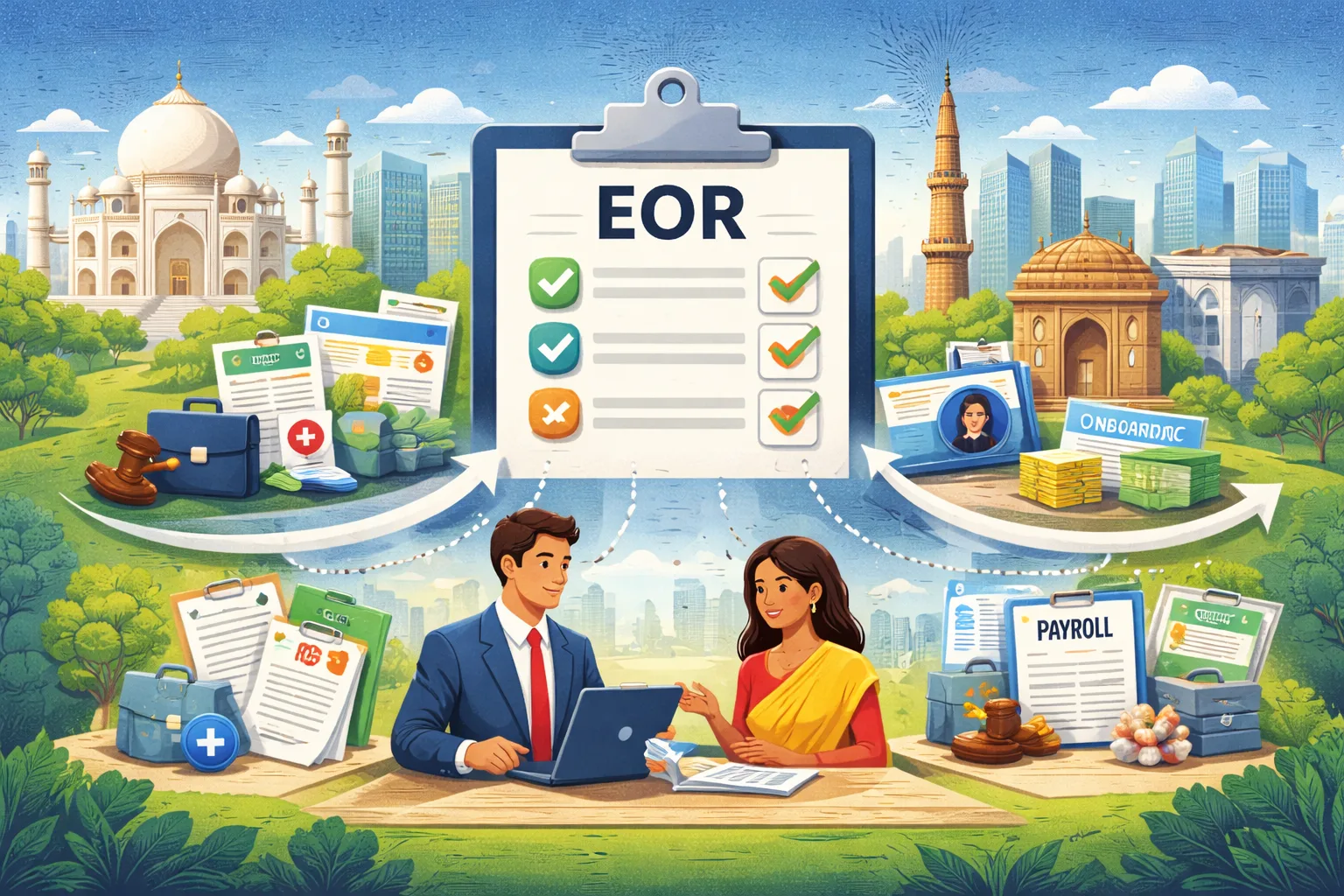
EOR (Employer of Record) services allow you to hire employees in another country without setting up a legal entity there.
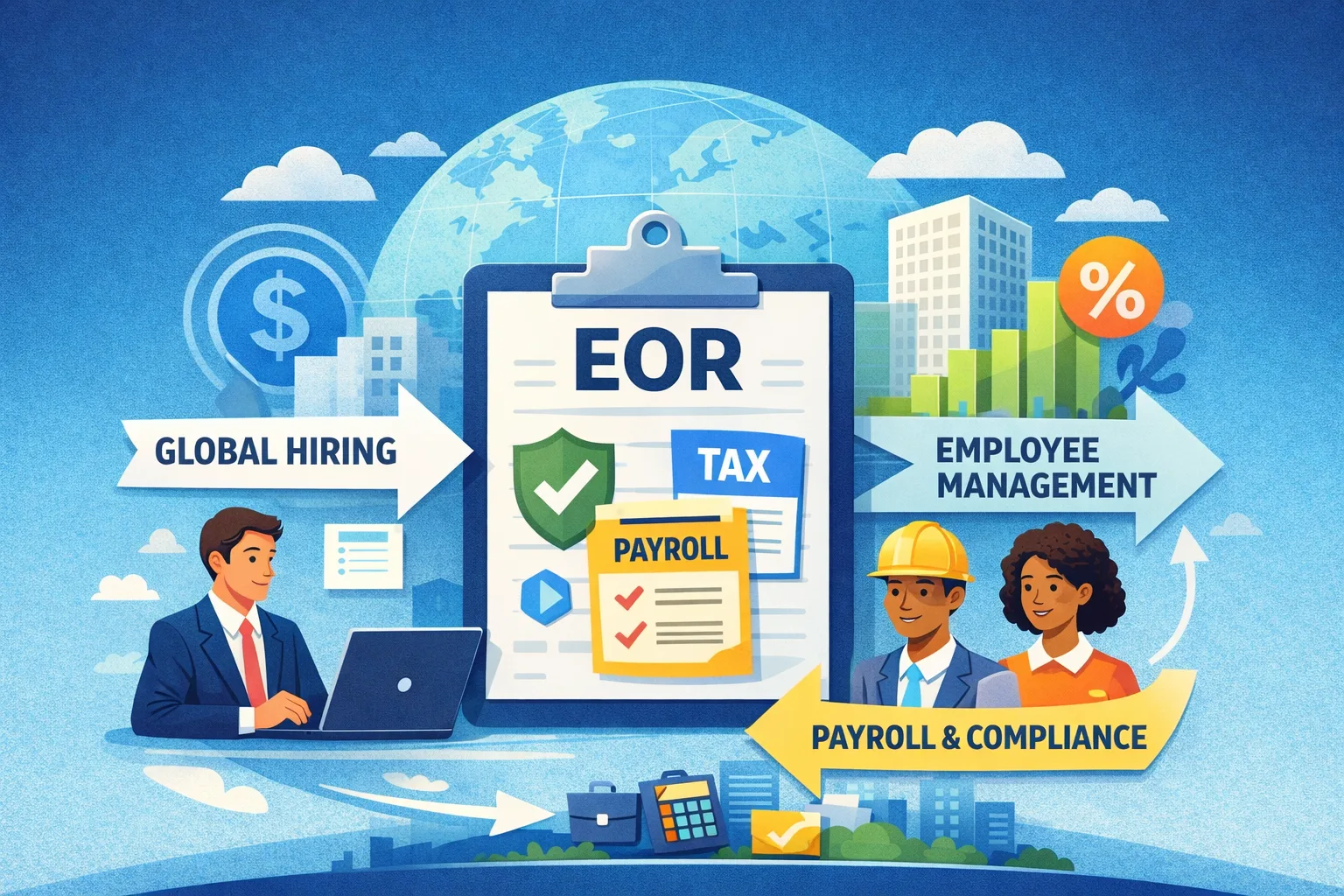
The EOR becomes the employee’s legal employer and handles payroll, taxes, benefits, contracts, and compliance, while you manage the employee’s day-to-day work.
Why Companies Use EOR Services in 2026 (The Real Reason)
Most companies don’t choose EOR because they “love HR paperwork.”
They choose EOR because global hiring can get risky and slow, fast.
Here’s what EOR solves instantly:
✅ You want to hire globally without entity setup
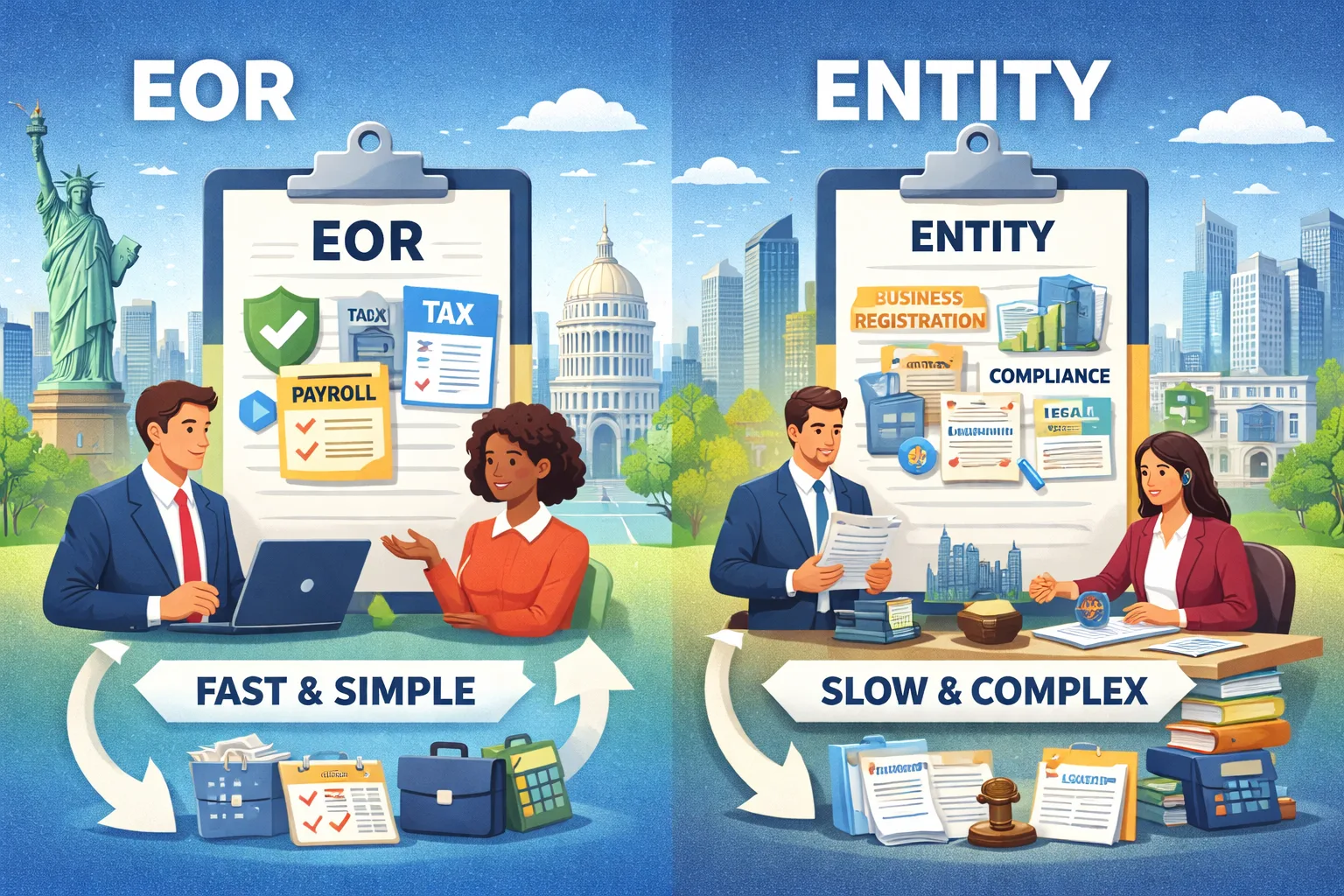
Setting up a local entity can involve:
- legal registration
- accounting setup
- local directors / addresses
- ongoing compliance and reporting
EOR eliminates all of that.
✅ You want speed
Top candidates don’t wait 6–10 weeks while you “figure things out.”
EOR helps you onboard faster.
✅ You want to stay compliant
Every country has different rules for:
- salary structure
- statutory deductions
- employee benefits
- termination policies
- leave requirements
EOR keeps it compliant from Day 1.
✅ You don’t want misclassification issues
Hiring as a contractor when the role is clearly full-time can create legal and financial issues later. EOR offers a safer, structured way to hire as an employee.
What Does an Employer of Record (EOR) Actually Do?
Let’s make this super clear.
With an EOR:
You do:
✅ choose the candidate
✅ decide salary + role
✅ manage performance
✅ assign work & deadlines
✅ build team culture
The EOR does:
✅ legal employment setup
✅ compliant contracts
✅ monthly payroll
✅ taxes and statutory filings
✅ benefits + insurance
✅ leave + HR compliance
✅ employee lifecycle documentation
Think of the EOR as your global employment backbone.
How EOR Services Work (Step-by-Step)
Here’s the end-to-end process of how EOR works, explained like a real-world workflow:
Step 1: You select the country + role
You decide where you want to hire (for example: UAE, US, India, Singapore, etc.) and finalize:
- role
- employment type (full-time)
- expected start date
✅ At this stage, an EOR provider can confirm:
- employment feasibility
- compliance requirements
- expected onboarding time
Step 2: You finalize salary + employment terms
This includes:
- monthly/annual salary
- probation period (if applicable)
- working hours
- notice period
- benefits (statutory + optional)
🔎 Important: Some countries have mandatory benefit structures or minimum requirements.
Step 3: The EOR drafts a locally compliant employment contract
The contract is created according to local laws and typically includes:
- job title + scope
- working hours + leave policy
- compensation breakdown
- termination clauses + notice
- statutory benefits mention
This is where most global hiring mistakes happen—because contracts aren’t “one template fits all.”
EOR solves that.
Step 4: The employee signs + onboarding begins
Once the employee signs the contract:
- documentation is collected
- payroll setup begins
- benefits enrollment is planned
Onboarding support can include:
✅ employee guidance
✅ document checklists
✅ HR support
Step 5: Employee starts work under your management
This is the part most founders worry about:
“Will they still work like our employee?”
Yes.
The employee works with your team exactly like a normal hire:
- reports to your manager
- attends your meetings
- follows your work tools (Slack, Notion, Jira, etc.)
The difference is legal + payroll is handled through the EOR.
Step 6: Monthly payroll + compliance runs automatically
Every month, the EOR manages:
- payroll calculation
- taxes / deductions
- payslip generation
- salary disbursement
- statutory contributions (where applicable)
You get a single, clean process—without juggling vendors.
Step 7: Ongoing HR support + lifecycle management
EOR providers continue to support:
- leave tracking
- benefits updates
- policy questions
- contract changes (if needed)
- exit formalities (if required)
So the employment remains compliant through the entire lifecycle.
How Long Does EOR Onboarding Take?
This depends on the country, but in many cases:
✅ 3 to 10 business days is common
(assuming documents and approvals are smooth)
Some countries may need longer if:
- background checks are mandatory
- benefits enrollment takes time
- there are local verification requirements
But overall, EOR is significantly faster than entity setup.
EOR Pricing (What It Costs in 2026)
Most businesses ask this early—and they should.
Typical EOR pricing looks like:
✅ $200 to $800 per employee per month
Pricing depends on:
- the country you’re hiring in
- benefits complexity
- number of employees
- employment terms & compliance requirements
A good EOR provider will offer:
- transparent pricing
- clear breakdowns (what’s included)
- optional add-ons (if any)
H2: EOR vs Contractors (What’s Better?)
A lot of teams start with contractors because it feels easy.
But there’s a key difference:
Contractors
✅ quick to start
❌ can create legal risk if the role is full-time
❌ benefits & protection may be unclear
❌ harder to retain long-term
EOR Employees
✅ legally employed in-country
✅ compliant payroll + benefits
✅ better retention + stability
✅ scalable for long-term hiring
If your hire is working like a full-time employee, EOR is usually the safer long-term route.
Country + Compliance (Why It’s Not Optional)
Global hiring isn’t just “send salary and done.”
Each country has different requirements for:
- employee classification
- tax deductions
- working hours + overtime rules
- leave policies
- statutory benefits
- notice periods
Even a simple hiring decision can become complex when done across multiple countries.
That’s why EOR is valuable: it gives you a compliant employment setup without building a full HR + legal team for every region.
Why ezyHire Is Built for Seamless EOR Hiring
If your goal is simple:
Hire global talent fast, stay compliant, and avoid entity headaches—
Then ezyHire’s EOR services are designed exactly for that.
With ezyHire, you get:
✅ payroll + taxes handled
✅ employee benefits + insurance support
✅ leave management
✅ onboarding support
✅ cost-effective global hiring
✅ services across 130+ countries
✅ transparent pricing + tailored solutions
Your side stays clean:
You hire. You manage the work. You grow.
Effortless Employment Solutions with EOR Services
Streamline your hiring process and focus on growing your business with ezyHire’s Employer of Record (EOR) services.
We handle:
✅ payroll
✅ taxes
✅ benefits
✅ compliance
✅ onboarding
So you can focus on what you do best.
FAQs About EOR Services
1) What are EOR services in simple words?
EOR services let you hire employees in another country legally, without setting up your own company there.
2) Do EOR services include payroll and tax compliance?
Yes. A proper EOR manages payroll, deductions, and compliance processes as required locally.
3) Can I hire in multiple countries using one EOR provider?
Yes. Many EOR providers support hiring across multiple countries under one process.
4) Does an EOR handle employee contracts?
Yes. Contracts are created as per local employment laws and signed under the EOR as legal employer.
5) How much does an EOR cost per employee?
Most EOR services cost between $200–$800 per employee per month, depending on country and benefits.
6) Do I lose control of my team if I use an EOR?
Not at all. You still manage day-to-day work, targets, reporting, and performance.
7) Is EOR better than hiring contractors?
If someone is working like a full-time employee, EOR is usually safer and more compliant than contractor hiring.
8) Can I move employees from EOR to my own entity later?
Yes. Many companies start with EOR and transition to an entity when they scale.
EOR services are the easiest way to hire globally in 2026—without entity setup, without compliance stress, and without slowing your growth.
If you’re ready to onboard international employees the right way:
👉 Explore ezyHire’s Employer of Record (EOR) Services