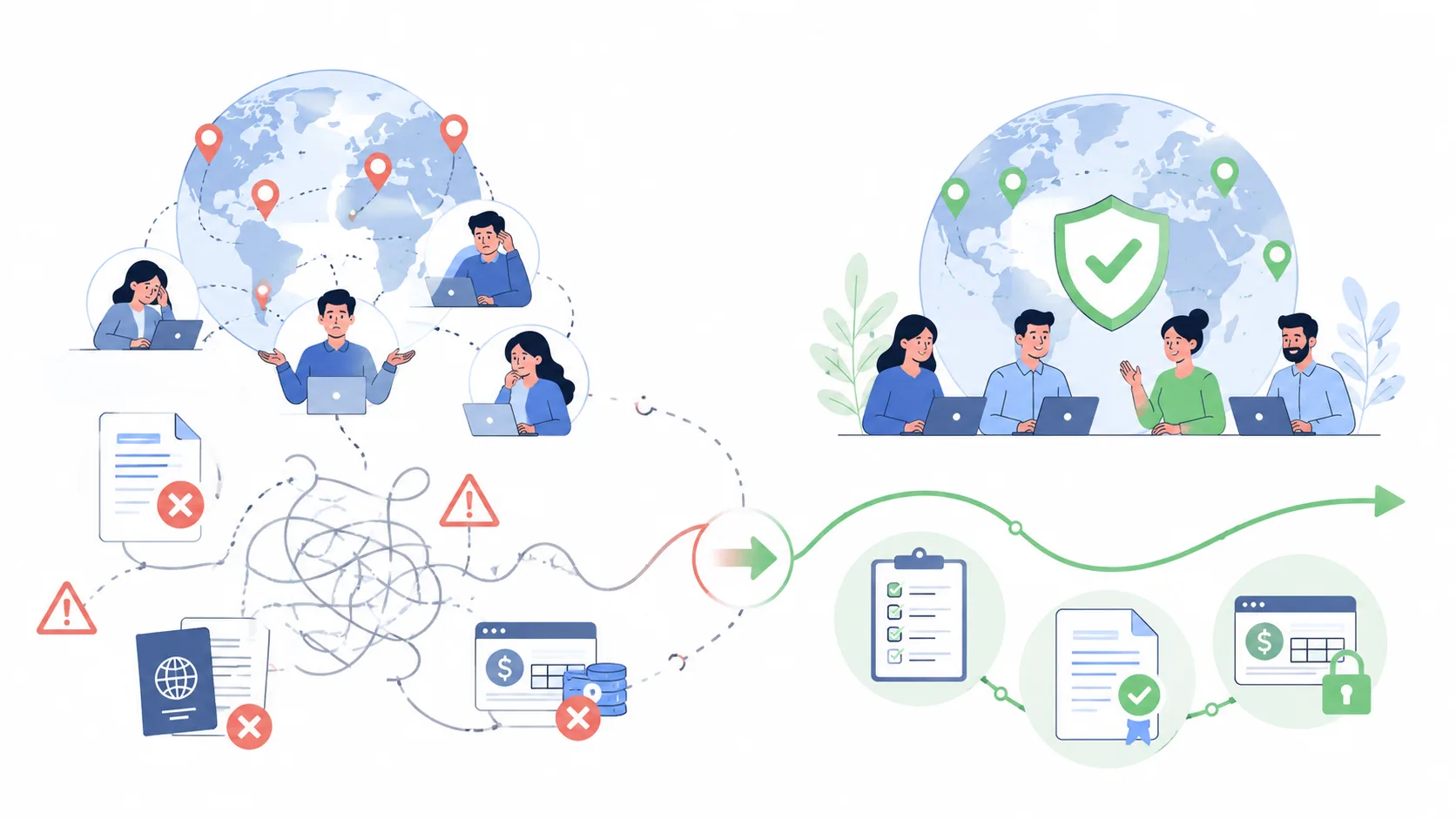

As businesses increasingly hire talent across borders, managing employees has become more complex than ever before. Companies are no longer restricted to recruiting within their home country. Today, a startup in the United States can hire developers in India, a fintech company in the UK can onboard customer success teams in the Philippines, and a SaaS business in Singapore can build a remote marketing team across Europe.
While international hiring creates exciting opportunities, it also brings legal, financial, and administrative responsibilities. Every country has different labor laws, payroll regulations, tax requirements, employee benefits, termination policies, and compliance standards. Navigating these differences without the right support can slow down expansion and expose businesses to unnecessary risks.
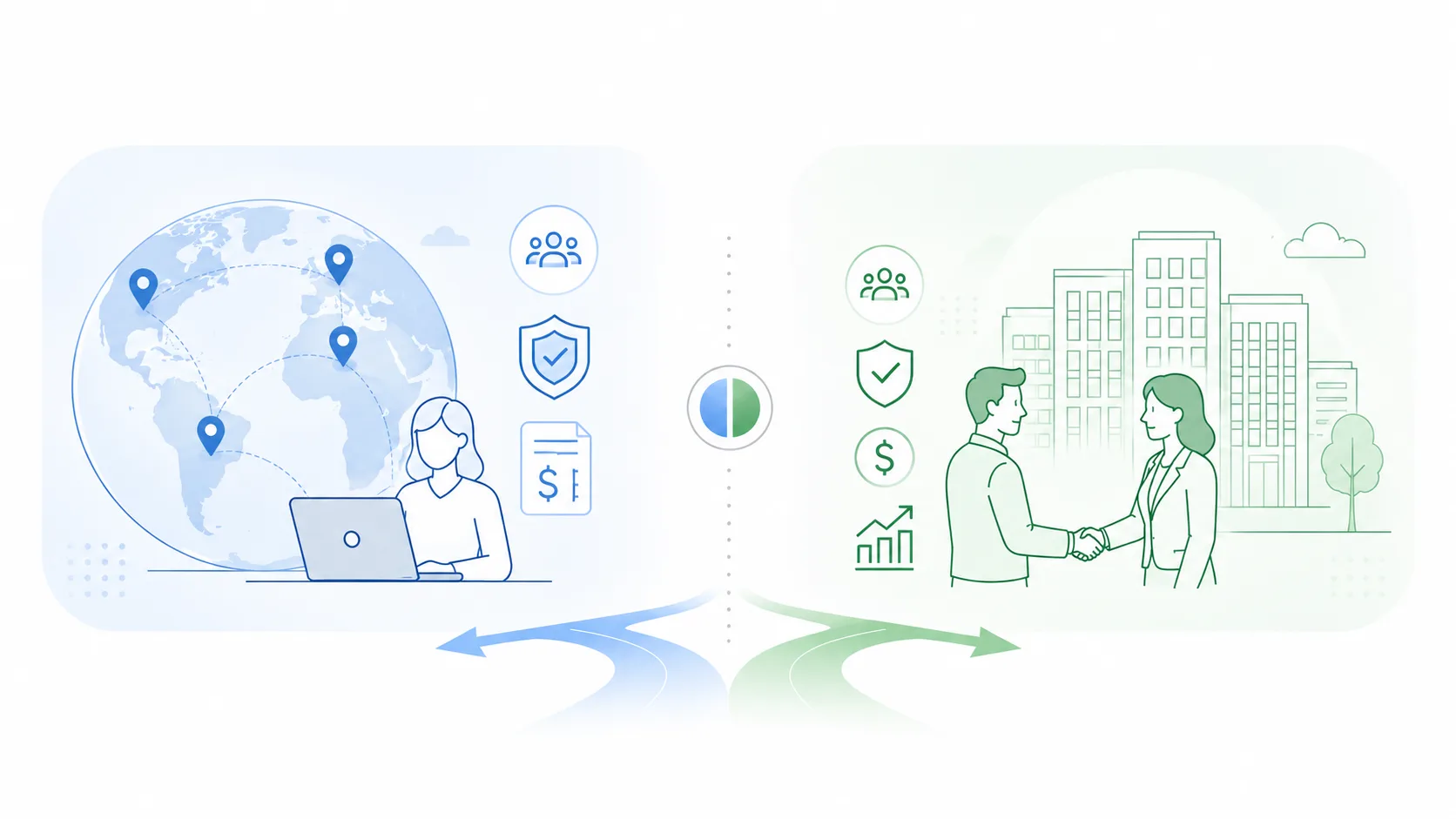
This is why many organizations turn to workforce management solutions such as an Employer of Record (EOR) or a Professional Employer Organization (PEO). Although these two models are often mentioned together, they serve very different purposes.
Understanding the difference between an EOR and a PEO is essential before deciding which solution aligns with your business goals. Choosing the wrong model could lead to compliance challenges, unexpected costs, or delays in hiring.
In this guide, we’ll explain how EORs and PEOs work, compare their responsibilities, highlight their advantages and limitations, and help you determine which option is best for your organization.
What Is an Employer of Record (EOR)?
An Employer of Record (EOR) is a third-party organization that legally employs workers on behalf of another company.
Instead of establishing a legal entity in every country where you want to hire, you can partner with an EOR that already has an established presence. The EOR becomes the employee’s official legal employer while your company retains complete control over the employee’s daily responsibilities, performance, projects, and career development.
This allows businesses to hire talent quickly and compliantly without dealing with the complexities of foreign employment laws.
An Employer of Record typically manages:
- Employment contracts
- Payroll processing
- Tax deductions and filings
- Social security contributions
- Employee benefits
- Health insurance administration
- Leave management
- Employment compliance
- HR documentation
- Onboarding and offboarding
- Local labor law compliance
For the employee, the experience feels seamless. They work directly with your company, report to your managers, and contribute to your business objectives. Behind the scenes, the EOR ensures that every legal and administrative requirement is handled correctly.
What Is a Professional Employer Organization (PEO)?
A Professional Employer Organization (PEO) provides outsourced HR services through a co-employment model.
Unlike an Employer of Record, a PEO does not become the sole legal employer. Instead, your company and the PEO share certain employment responsibilities.
Your company continues to be the legal employer while the PEO supports HR functions such as payroll administration, employee benefits, compliance guidance, and human resource management.
A PEO generally assists with:
- Payroll administration
- Employee benefits
- HR policy development
- Recruitment support
- Performance management guidance
- Compliance assistance
- Employee handbooks
- HR technology
- Workers’ compensation administration
However, there’s one important requirement.
To work with a PEO, your business usually must already have a registered legal entity in the country where your employees are located.
If your company doesn’t legally exist in that country, a PEO typically cannot employ workers on your behalf.
This is the biggest distinction between the two models.
EOR vs PEO: The Fundamental Difference
Although both solutions simplify HR and payroll, they solve different business problems.
The simplest way to understand the difference is this:
An Employer of Record enables you to hire internationally without establishing a legal entity.
A Professional Employer Organization helps manage HR for employees you already legally employ.
Imagine your company wants to hire software engineers in Germany.
Option 1: Using an Employer of Record
You don’t have a German subsidiary.
The EOR legally hires the engineers in Germany.
Your company manages their daily work while the EOR handles payroll, employment contracts, taxes, statutory benefits, and compliance with German labor laws.
No local entity is required.
Option 2: Using a PEO
Your company already has a registered office in Germany.
Instead of building an internal HR department, you partner with a PEO.
The PEO helps manage payroll, employee benefits, HR processes, and administrative tasks.
However, your company remains the legal employer throughout the employment relationship.
EOR vs PEO: Side-by-Side Comparison
Feature | Employer of Record (EOR) | Professional Employer Organization (PEO) |
Legal Employer | EOR | Your Company |
Requires Local Entity | No | Yes |
International Hiring | Excellent | Limited |
Payroll | Managed by EOR | Supported by PEO |
Employment Contracts | Managed by EOR | Managed by Employer |
Tax Compliance | EOR Responsibility | Shared Responsibility |
Employee Benefits | Managed by EOR | Assisted by PEO |
HR Administration | Full-service | Shared HR Support |
Best For | Global expansion | Domestic HR outsourcing |
Looking at this comparison, it’s clear that both solutions have value—but they serve different stages of business growth.
If your priority is entering new international markets quickly, an Employer of Record offers the flexibility to hire employees without establishing local entities.
On the other hand, if your business already has a legal presence in a country and simply wants additional HR support, a Professional Employer Organization may be the better fit.
Why Businesses Often Confuse EOR and PEO
The confusion between EORs and PEOs usually comes from the fact that both services handle payroll, employee benefits, and HR administration.
From a distance, they appear very similar. However, the legal structure behind each model is completely different.
An EOR assumes legal responsibility for employing workers in countries where your business does not have a legal entity. This makes it a strategic solution for international expansion.
A PEO, by contrast, enhances the HR capabilities of businesses that already have a registered entity. It is designed to improve operational efficiency rather than enable market entry.
Understanding this distinction is essential before making a hiring decision, especially if your business plans to expand across multiple countries.
When Should You Choose an Employer of Record (EOR)?
An Employer of Record is ideal for businesses looking to expand internationally without the administrative burden of establishing legal entities in every country.
If you’re hiring one employee in Canada, three developers in India, or a sales manager in the UAE, setting up subsidiaries in each location can be both expensive and time-consuming. Incorporating a business overseas often requires local directors, bank accounts, tax registrations, legal documentation, and ongoing compliance reporting.
An EOR eliminates these hurdles by allowing you to hire employees almost immediately while remaining compliant with local employment laws.
An Employer of Record is the right choice if your business wants to:
Expand into new markets quickly
Businesses often test a market before making a long-term investment. Instead of opening an office immediately, they hire a few employees to validate demand.
Using an EOR allows companies to enter a market within days instead of waiting months for entity registration.
For example:
A SaaS company based in Australia wants to explore opportunities in Germany. Rather than investing thousands of dollars in establishing a German subsidiary, it hires two sales executives through an EOR. If the market performs well, the company can later establish its own legal entity.
Hire remote employees globally
Remote work has transformed recruitment.
Companies no longer compete only within their own cities—they recruit talent worldwide.
An Employer of Record enables organizations to legally hire professionals across multiple countries while ensuring every employee receives locally compliant contracts, payroll, benefits, and statutory protections.
This makes it significantly easier to build distributed teams without creating operational complexity.
Reduce compliance risks
Employment laws vary dramatically across countries.
Different jurisdictions have unique requirements for:
- Minimum wages
- Probation periods
- Paid leave
- Overtime
- Social security
- Health insurance
- Employee termination
- Severance pay
- Tax withholding
Missing even one legal obligation can expose businesses to penalties or legal disputes.
An EOR continuously monitors these regulations, helping companies remain compliant as laws evolve.
Scale internationally with flexibility
One of the biggest advantages of an EOR is flexibility.
Businesses can:
- Hire one employee
- Expand to multiple countries
- Reduce workforce if needed
- Enter new markets
- Exit markets without dissolving foreign entities
This agility is especially valuable for startups and high-growth companies.
When Should You Choose a PEO?
A Professional Employer Organization serves a different purpose.
Rather than enabling international hiring, a PEO helps businesses optimize HR operations after they already have a legal presence.
A PEO is an excellent option when:
Your business already has a registered entity
If you’ve established a company in another country and have employees on your own payroll, managing HR internally can become overwhelming.
Instead of hiring an entire HR department, businesses often outsource payroll, benefits administration, compliance guidance, and employee support to a PEO.
You want better employee benefits
Many PEOs negotiate employee benefit packages across multiple organizations.
This allows smaller businesses to offer competitive:
- Health insurance
- Retirement plans
- Wellness programs
- Employee assistance programs
without negotiating individually with providers.
You need HR expertise
Growing businesses often require support for:
- Employee policies
- Performance management
- Workplace compliance
- HR documentation
- Training programs
A PEO provides experienced HR professionals who supplement your internal team.
Advantages of an Employer of Record
Choosing an Employer of Record provides several strategic benefits beyond payroll management.
1. Faster International Expansion
Setting up a foreign subsidiary can take months.
An Employer of Record allows businesses to hire employees within days, significantly reducing expansion timelines.
This enables organizations to respond quickly to market opportunities.
2. Lower Operational Costs
Opening a legal entity involves:
- Registration fees
- Legal expenses
- Accounting costs
- Corporate tax filings
- Banking setup
- Ongoing compliance
For companies hiring only a handful of employees, these costs rarely make financial sense.
An EOR removes these overheads while providing full employment support.
3. Better Compliance
International employment regulations change frequently.
A reliable Employer of Record keeps up with changes in:
- Labor laws
- Tax legislation
- Payroll requirements
- Statutory benefits
- Government reporting
This significantly reduces legal risk.
4. Improved Employee Experience
Employees receive:
- Accurate payroll
- Timely salary payments
- Local employment contracts
- Insurance benefits
- Paid leave
- HR support
These factors improve retention and employee satisfaction.
5. Simplified Global Payroll
Managing payroll across multiple countries is complex.
Different currencies, tax systems, and reporting requirements increase administrative workload.
An Employer of Record centralizes payroll management while ensuring local compliance.
Advantages of a Professional Employer Organization
Although a PEO isn’t designed for international expansion, it offers considerable value for companies with established entities.
Shared HR Expertise
Businesses gain access to experienced HR professionals without expanding internal teams.
This improves HR operations while reducing administrative work.
Strong Employee Benefits
PEOs often provide access to larger benefit programs than smaller businesses could negotiate independently.
This can improve employee retention and satisfaction.
Payroll Administration
Payroll processing becomes faster and more accurate, reducing administrative errors.
HR Technology
Many PEOs include employee portals, attendance systems, onboarding platforms, and HR software.
This improves operational efficiency across the organization.
Disadvantages of an Employer of Record
While EORs offer significant advantages, they may not be suitable for every situation.
Higher monthly service costs
Compared to handling payroll internally, EOR services involve ongoing management fees.
However, these fees are often substantially lower than establishing and maintaining foreign entities.
Limited customization
Since employees are legally employed by the EOR, certain employment structures may need to follow standardized local practices.
Long-term entity strategy
If a company plans to hire hundreds of employees in a country, establishing its own subsidiary may eventually become more cost-effective.
Many organizations initially use an EOR before transitioning to their own entity later.
Disadvantages of a PEO
PEOs also have limitations.
Requires an existing legal entity
This is the biggest drawback.
Without a registered business in the country, a PEO generally cannot support employment.
Shared compliance responsibility
Unlike an EOR, compliance obligations remain partly with your business.
Companies must still ensure they meet legal employer responsibilities.
Less suitable for international expansion
A PEO is designed to optimize HR—not enable market entry.
If international hiring is your goal, an Employer of Record is usually the better choice.
Cost Comparison: EOR vs PEO
Many businesses assume a PEO is always less expensive.
In reality, the answer depends on your expansion strategy.
If you already have a registered entity, a PEO can reduce HR administration costs.
However, if you don’t have a legal entity, the cost of establishing one—combined with legal, accounting, payroll, and compliance expenses—often exceeds the cost of partnering with an Employer of Record.
For companies hiring just a few employees internationally, an EOR is typically the more cost-effective solution.
Real-World Examples: When to Use an EOR vs a PEO
Sometimes the easiest way to understand the difference between an Employer of Record and a Professional Employer Organization is through real-world scenarios.
Example 1: A Startup Expanding Internationally
Imagine a technology startup based in the United States wants to hire its first software engineer in India.
The company has no registered entity in India and doesn’t plan to open an office immediately. Setting up a legal entity would require legal registrations, tax identification, accounting support, banking arrangements, and ongoing compliance—all before the first employee is hired.
In this situation, an Employer of Record is the ideal solution.
The EOR legally employs the developer in India, manages payroll, taxes, employee benefits, and statutory compliance, while the startup continues to manage the employee’s projects, goals, and performance.
The company can start hiring within days instead of waiting several months.
Example 2: A Growing Business With an Existing Office
Now consider a manufacturing company that already has an office in Singapore with 150 employees.
The company doesn’t need help entering the market because it’s already established there. Instead, its HR team is overwhelmed by payroll processing, employee benefits administration, policy updates, and compliance documentation.
A Professional Employer Organization is a better fit.
The PEO supports payroll administration, employee benefits, HR processes, and compliance guidance, allowing the company’s internal HR team to focus on strategic initiatives.
Example 3: Testing a New Market
A software company wants to evaluate demand in Brazil by hiring two sales representatives.
The company isn’t sure whether it will expand permanently and doesn’t want to invest in establishing a Brazilian subsidiary.
An Employer of Record provides the flexibility to hire quickly, operate compliantly, and exit the market if needed without the complexities of closing a foreign entity.
Common Mistakes Businesses Make
Choosing between an EOR and a PEO isn’t always straightforward. Here are some of the most common mistakes businesses make when expanding internationally.
Assuming They’re the Same Service
Although both solutions support HR and payroll, their legal structures are entirely different.
An EOR becomes the legal employer, while a PEO operates under a co-employment model.
Understanding this distinction is crucial before making a decision.
Opening a Legal Entity Too Early
Many companies establish subsidiaries before validating whether a market has long-term potential.
If hiring only a small number of employees, the costs of incorporation, legal support, accounting, and ongoing compliance can outweigh the benefits.
An Employer of Record offers a more flexible and cost-effective way to test new markets before making permanent investments.
Underestimating Compliance
Employment laws differ significantly from country to country.
Ignoring local regulations related to employment contracts, notice periods, statutory leave, or tax obligations can result in financial penalties and legal disputes.
Partnering with an experienced EOR or PEO helps reduce these risks.
Focusing Only on Cost
Choosing the cheapest provider isn’t always the best decision.
Businesses should also evaluate:
- Country coverage
- Payroll accuracy
- Compliance expertise
- Customer support
- Employee experience
- Technology platform
- Scalability
A trusted partner can save far more in compliance costs than a low-cost provider with limited expertise.
How to Choose the Right Solution
Before selecting an EOR or PEO, ask yourself these questions:
Do you already have a legal entity in the country?
If the answer is yes, a PEO may be suitable.
If the answer is no, an Employer of Record is generally the better option.
Are you hiring internationally?
For global hiring across multiple countries, an EOR offers greater flexibility and faster market entry.
How quickly do you need to hire?
If speed is a priority, an Employer of Record allows businesses to onboard employees much faster than establishing a legal entity.
What’s your long-term expansion plan?
If you’re testing a market or hiring a small international team, an EOR is often the most practical solution.
If you’re planning large-scale operations with hundreds of employees, establishing your own entity and partnering with a PEO may become more cost-effective over time.
EOR vs PEO: At a Glance
Feature | Employer of Record (EOR) | Professional Employer Organization (PEO) |
Legal Employer | EOR | Your Business |
Local Entity Required | No | Yes |
Best For | International hiring | HR support for existing entities |
Payroll | Fully managed | Shared administration |
Compliance | Managed by EOR | Shared responsibility |
Employment Contracts | EOR prepares and manages | Employer manages |
Global Expansion | Excellent | Limited |
Time to Hire | Fast | Depends on existing entity |
Frequently Asked Questions
What is the biggest difference between an EOR and a PEO?
The biggest difference is legal employment. An Employer of Record becomes the legal employer on behalf of your company, while a PEO works under a co-employment model and requires your business to have a legal entity.
Can an EOR replace a PEO?
Not necessarily. They solve different business challenges.
An EOR is designed for international hiring and market expansion, while a PEO supports HR administration for companies that already have a legal presence.
Is an Employer of Record legal?
Yes. Employer of Record services are widely used by startups, scale-ups, and multinational companies to hire employees compliantly in countries where they don’t have a registered business.
Can startups use an Employer of Record?
Absolutely.
Many startups use EOR services to access global talent, enter new markets, and avoid the cost of establishing legal entities during their early stages of growth.
Which option is more cost-effective?
If your company doesn’t already have a registered entity in the country where you want to hire, an Employer of Record is often the more affordable option because it eliminates incorporation and ongoing compliance costs.
Can I switch from an EOR to my own legal entity later?
Yes.
Many companies begin with an Employer of Record to hire quickly and test new markets. As their workforce grows, they later establish their own legal entity and transition employees from the EOR.
Final Thoughts
Global hiring has become a competitive advantage for businesses of every size. Whether you’re building a remote-first workforce, entering new international markets, or recruiting specialized talent, choosing the right employment model is essential for sustainable growth.
While Employer of Record (EOR) and Professional Employer Organization (PEO) services both simplify HR and payroll, they address different business needs.
If your company wants to hire employees in countries where it doesn’t have a legal entity, an Employer of Record offers the fastest, safest, and most compliant path to international expansion.
On the other hand, if your organization already has an established presence and simply wants support with HR administration, payroll, and employee benefits, a Professional Employer Organization can be an effective solution.
By understanding the differences between these two models, businesses can make informed decisions that reduce compliance risks, improve employee experiences, and accelerate global growth.
Expand Your Global Workforce with ezyHire
Hiring internationally doesn’t have to be complicated.
With ezyHire’s Employer of Record (EOR) services, you can hire, onboard, pay, and manage employees in 130+ countries without establishing local entities. We handle employment contracts, payroll, tax compliance, statutory benefits, onboarding, leave management, and ongoing HR support—so you can focus on building your business.
Whether you’re hiring your first international employee or scaling a global workforce, ezyHire provides the expertise and infrastructure to help you expand confidently.
Ready to simplify global hiring? Contact ezyHire today and discover how our Employer of Record solutions can help you build a compliant, borderless workforce.