
Introduction
Artificial intelligence is reshaping how businesses verify identities and manage security risks. Traditional identity verification methods relied heavily on manual checks and physical document inspections. These processes were slow, inefficient, and often vulnerable to fraud.
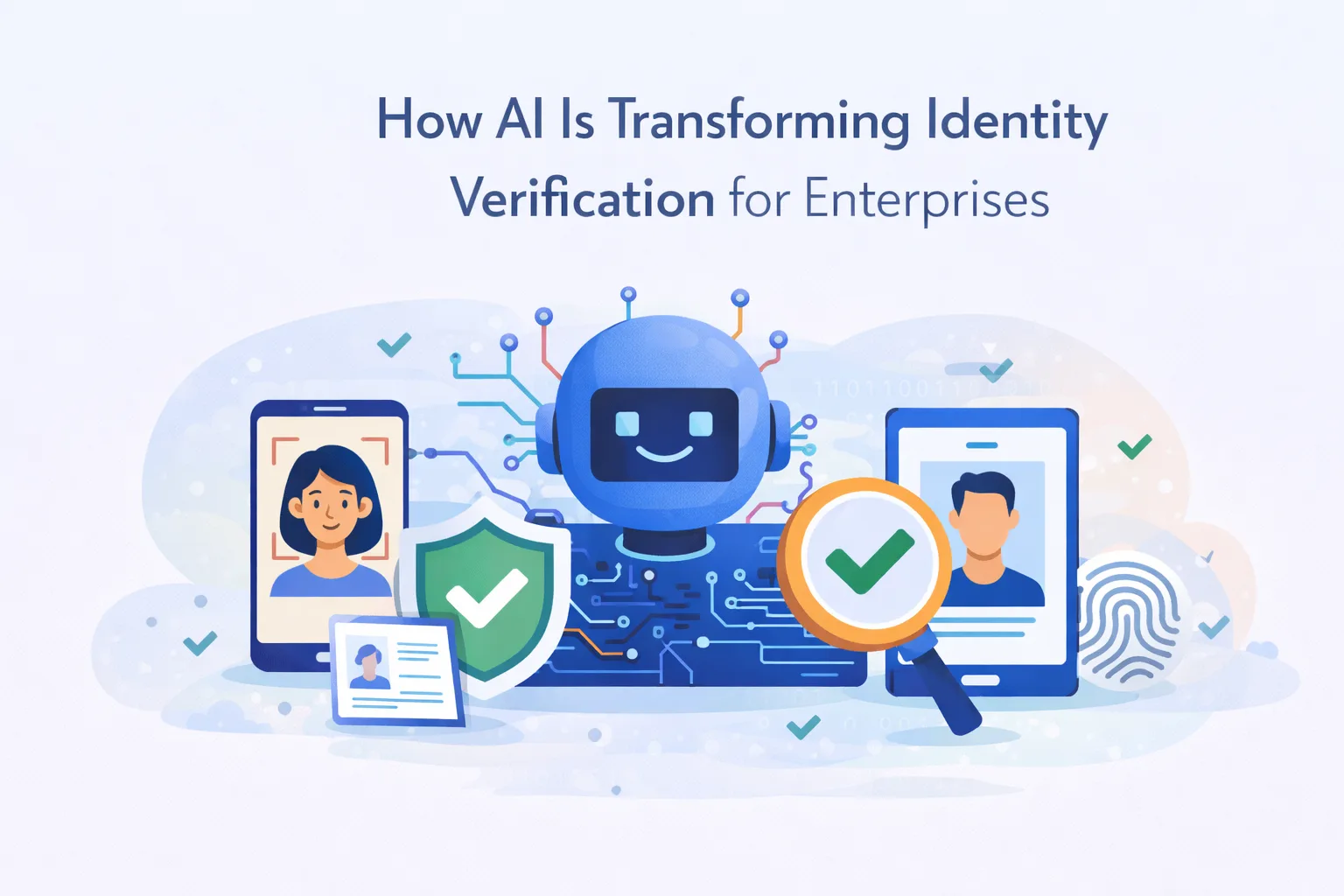
AI-powered identity verification systems now allow enterprises to authenticate identities faster and more accurately than ever before. By combining machine learning, biometric authentication, and document analysis, these systems can detect fraudulent identities and verify individuals in real time.
For large enterprises that manage thousands of employees, customers, and partners, AI-powered identity verification has become a critical tool for maintaining operational security.
What Is AI-Based Identity Verification?
AI-based identity verification uses artificial intelligence algorithms to analyze identity documents, biometric data, and behavioral patterns.
Unlike manual verification processes, AI systems can process large amounts of identity data quickly and identify inconsistencies that may indicate fraud.
These systems are capable of detecting forged documents, identifying suspicious patterns, and confirming identity authenticity within seconds.
How AI Improves Identity Verification
Artificial intelligence enhances identity verification in several ways.
Automated Document Analysis
AI systems analyze identity documents and detect signs of manipulation such as altered images, mismatched fonts, or missing security features.
Facial Recognition Technology
Biometric systems compare a candidate’s live image with the photograph on the identity document to confirm identity authenticity.
Fraud Detection Algorithms
Machine learning algorithms detect suspicious identity patterns and flag potentially fraudulent activities.
Real-Time Verification
AI-powered systems can verify identities instantly, allowing businesses to approve onboarding processes quickly.
Benefits of AI Identity Verification for Enterprises
Enterprises benefit significantly from AI-powered identity verification solutions.
Scalability
AI systems can process thousands of identity verifications simultaneously, making them ideal for large organizations.
Accuracy
Machine learning algorithms improve verification accuracy by identifying patterns that may be missed by manual checks.
Reduced Operational Costs
Automation reduces the need for large verification teams, lowering operational expenses.
Faster Decision Making
Real-time verification allows organizations to approve or reject identity verification requests quickly.
Industries Using AI-Based Identity Verification
Several industries rely heavily on AI-powered identity verification systems.
Financial Services
Banks and fintech companies verify customer identities to prevent fraud and comply with regulatory requirements.
Recruitment and HR
Companies verify employee identities before granting access to company systems and resources.
E-Commerce
Online marketplaces verify seller identities to ensure trust and prevent fraudulent transactions.
Healthcare
Healthcare providers verify patient identities to protect medical records and ensure accurate treatment.
Future of AI in Identity Verification
Artificial intelligence will continue to transform identity verification technologies in the coming years.
Emerging technologies such as behavioral biometrics, blockchain-based identity systems, and predictive fraud detection will further enhance verification processes.
Enterprises that adopt AI-powered verification tools will gain a competitive advantage by improving security and operational efficiency.
Conclusion
AI-powered identity verification is transforming how enterprises manage identity authentication and fraud prevention. By automating verification processes and improving accuracy, artificial intelligence allows businesses to verify identities quickly and securely.
As organizations continue to digitize their operations, AI-based identity verification will become an essential part of secure digital ecosystems.