
Introduction
Remote work has transformed the modern workplace. Organizations are no longer limited by geographic boundaries when hiring employees. Companies can now recruit talented professionals from anywhere in the world.
While remote hiring offers many advantages, it also introduces new challenges for HR teams. One of the biggest challenges is verifying the identity of employees without meeting them in person.
Traditional verification methods relied on physical document checks during onboarding. However, remote hiring requires companies to adopt digital verification methods that can authenticate identities securely.
Fortunately, modern identity verification technologies allow organizations to verify remote employees efficiently without requiring physical documents or in-person meetings.
Challenges of Verifying Remote Employees
Remote hiring introduces several identity verification challenges.
Lack of Physical Interaction
HR teams cannot physically inspect documents or meet candidates face-to-face.
Increased Fraud Risks
Remote hiring increases the risk of identity fraud, impersonation, and fake documentation.
Global Hiring Complexities
Hiring employees from different countries may require verifying identity documents issued by multiple governments.
Compliance Requirements
Organizations must ensure that identity verification processes comply with local employment regulations.
These challenges make digital identity verification solutions essential for remote hiring environments.
Methods Used to Verify Remote Employees
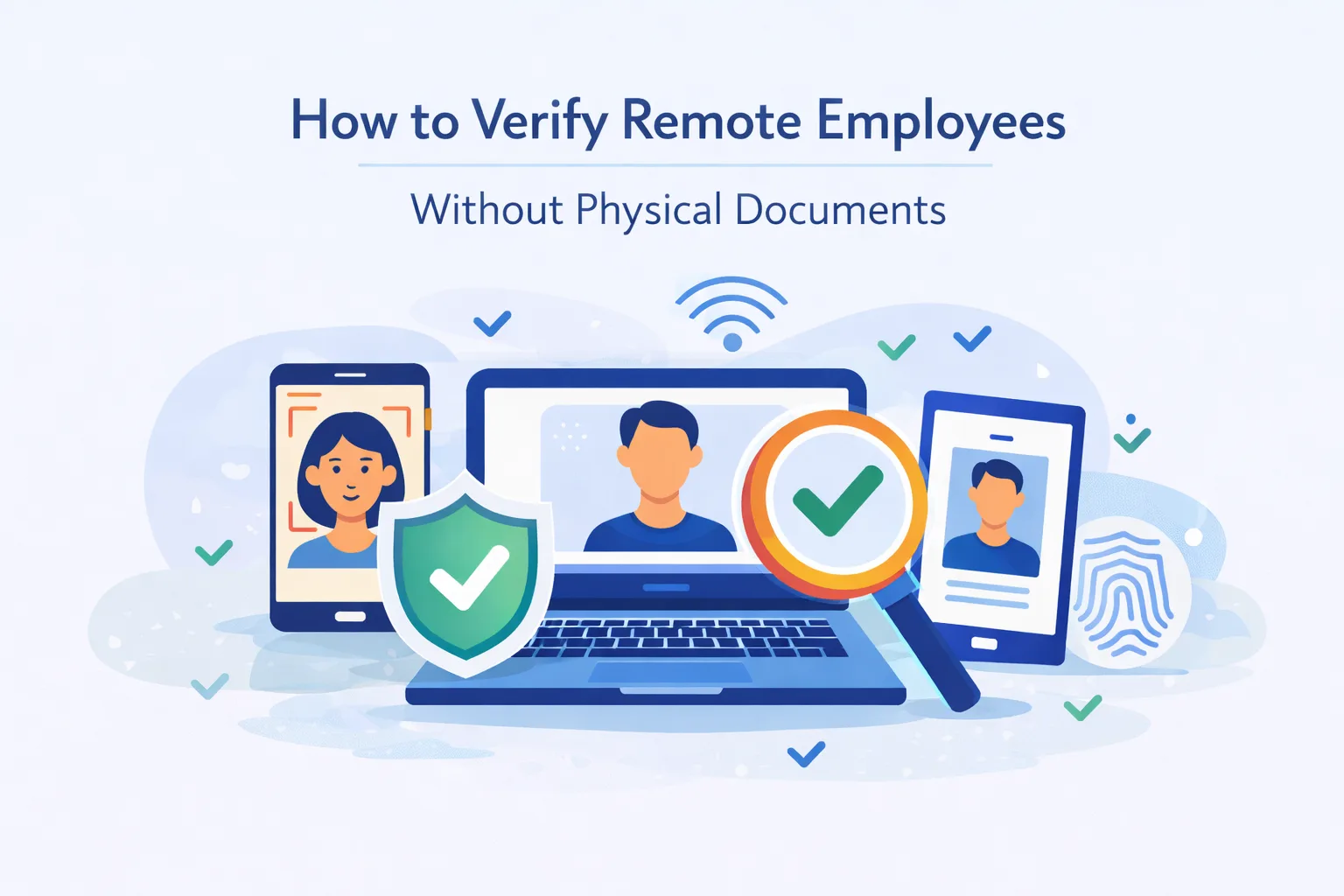
Organizations can use several digital methods to verify employee identities remotely.
Online Document Verification
Candidates upload identity documents such as passports or government ID cards through secure verification platforms.
AI-powered systems analyze these documents to detect tampering or forgery.
Biometric Identity Verification
Biometric verification uses facial recognition technology to confirm that the candidate submitting documents matches the photograph on the identity document.
Candidates typically take a live selfie or video during the verification process.
Video Verification
Some organizations conduct live video verification sessions where candidates present their identity documents during a recorded call.
This method allows HR teams to visually confirm document authenticity.
Background Verification
Background checks verify employment history, education credentials, and criminal records where applicable.
This step ensures that the candidate’s professional history is accurate.
Benefits of Digital Identity Verification for Remote Hiring
Digital verification technologies offer several advantages for remote hiring.
Faster Hiring Processes
Automated verification allows HR teams to verify employee identities quickly.
Enhanced Security
Advanced technologies such as AI and biometrics help detect fraudulent identities.
Global Hiring Capability
Organizations can verify employees from anywhere in the world without requiring physical presence.
Improved Candidate Experience
Candidates can complete verification processes easily through secure online platforms.
Technologies Enabling Remote Identity Verification
Several technologies power modern identity verification systems.
Artificial Intelligence
AI analyzes documents to detect signs of manipulation or forgery.
Facial Recognition
Biometric technology matches a candidate’s face with the photograph on their identity document.
Optical Character Recognition
OCR technology extracts text from identity documents and validates information.
Secure Databases
Verification platforms cross-check identity information against trusted databases.
Best Practices for Verifying Remote Employees
Organizations should follow structured verification practices when hiring remote employees.
Best practices include:
- Using trusted identity verification platforms
- Implementing biometric verification processes
- Conducting background verification checks
- Maintaining secure verification records
- Ensuring compliance with employment laws
Following these practices ensures that remote hiring processes remain secure and reliable.
Conclusion
Remote hiring has become a permanent part of the modern workforce. While verifying employee identities without physical documents may seem challenging, digital identity verification technologies make the process efficient and secure.
By adopting advanced verification tools and structured verification processes, organizations can confidently hire remote employees while maintaining strong security standards.