
Introduction
Employee identity verification is one of the most important steps in the hiring process. Before granting access to company systems, sensitive information, and internal resources, organizations must ensure that employees are genuinely who they claim to be.
In traditional hiring environments, identity verification often occurred during in-person onboarding sessions where candidates presented physical documents. However, the rise of remote hiring and digital recruitment processes has transformed how organizations verify employee identities.
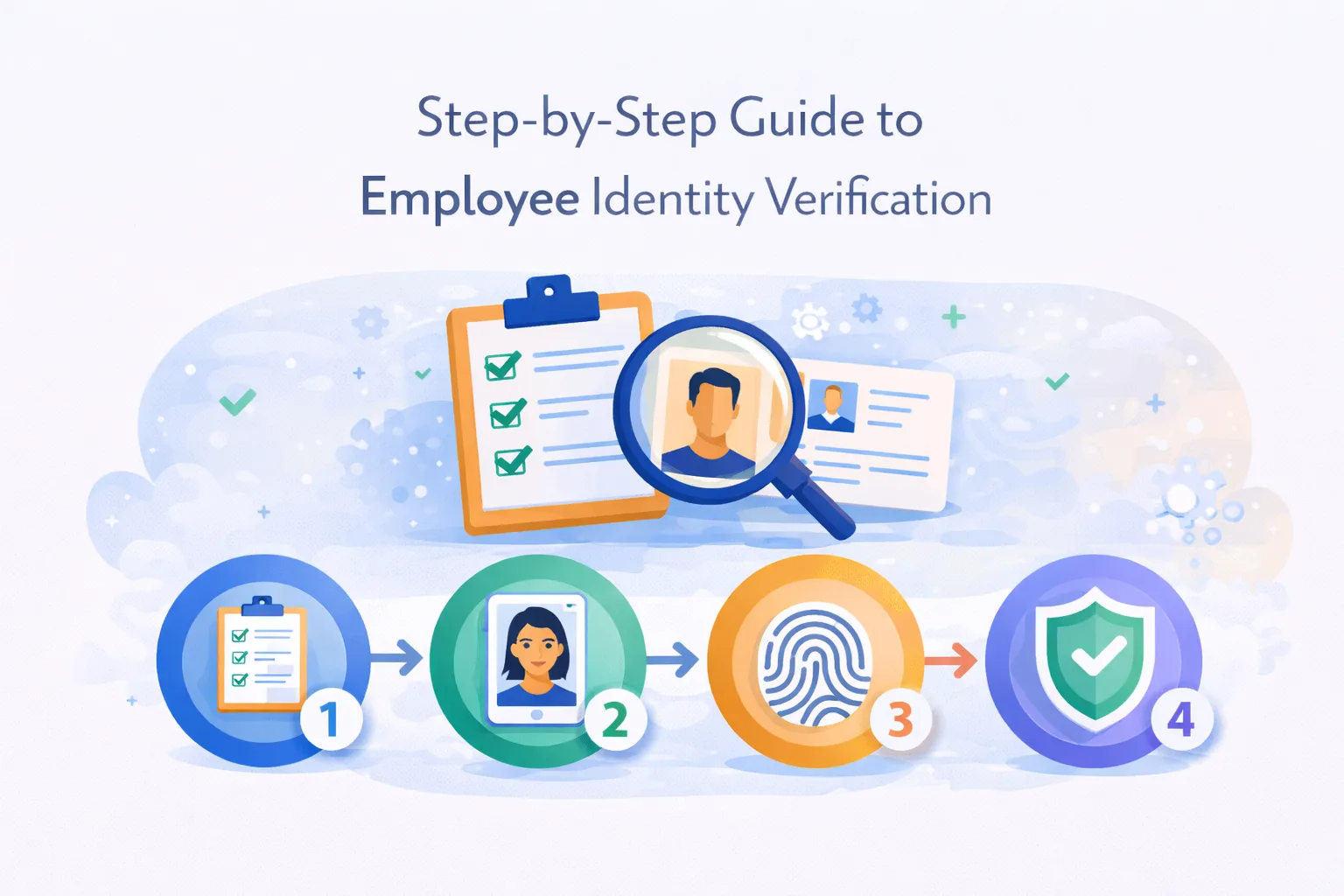
Modern identity verification solutions allow HR teams to authenticate identity documents and confirm candidate identities digitally. This guide explains the complete step-by-step process organizations use to verify employee identities securely.
Step 1: Collect Identity Documents
The first step in employee identity verification is collecting official identity documents from the candidate.
Commonly accepted documents include:
- Passport
- Government-issued ID card
- Driver’s license
- Address proof documents
- Tax identification documents
Candidates typically upload these documents through a secure verification portal during onboarding.
Organizations should ensure that the document submission process is secure and encrypted to protect sensitive personal information.
Step 2: Document Authentication
Once identity documents are submitted, verification systems analyze the documents to confirm authenticity.
Advanced verification platforms use artificial intelligence and machine learning to detect signs of document manipulation or forgery.
The system evaluates various elements of the document, including:
- Document format and structure
- Security features such as holograms
- Image consistency and clarity
- Text alignment and font consistency
If any irregularities are detected, the system may flag the document for manual review.
Step 3: Biometric Identity Verification
Biometric verification is an important step in confirming that the individual submitting identity documents is the same person shown on the document.
Candidates are typically asked to submit a live selfie or video during the verification process.
Facial recognition technology then compares the live image with the photograph on the identity document.
This step helps prevent identity theft and impersonation during remote hiring.
Step 4: Data Validation
After biometric verification, identity verification platforms validate the candidate’s personal information.
This process may involve cross-checking identity details against trusted databases to confirm accuracy.
For example, the system may verify:
- Name and date of birth
- Address information
- Identity document numbers
Data validation adds an additional layer of security to the verification process.
Step 5: Generate Verification Report
Once all verification checks are complete, the platform generates a verification report for HR teams.
This report typically includes:
- Identity verification status
- Document authenticity results
- Biometric verification results
- Any flagged issues or inconsistencies
HR teams can review this report before approving the candidate’s onboarding process.
Step 6: Securely Store Verification Records
After verification is completed, organizations should securely store verification reports and identity records.
Maintaining secure records helps companies demonstrate compliance with employment regulations and provides documentation for future audits.
Verification records should be stored in encrypted systems with restricted access.
How Digital Verification Platforms Simplify the Process
Manual identity verification processes can be time-consuming and prone to human error.
Digital verification platforms streamline the process by automating document authentication, biometric verification, and data validation.
Solutions such as EzyHire allow organizations to integrate identity verification directly into their hiring workflows. This reduces administrative effort for HR teams while improving verification accuracy and speed.
Best Practices for Employee Identity Verification
To ensure effective identity verification, organizations should follow several best practices.
- Verify identity documents during the onboarding stage
- Use automated verification platforms to improve accuracy
- Implement biometric verification for remote hiring
- Maintain secure verification records
- Ensure compliance with employment regulations
Following these practices helps organizations maintain secure and reliable hiring processes.
Conclusion
Employee identity verification is a critical step in ensuring secure hiring and protecting organizational resources. By following a structured verification process that includes document authentication, biometric verification, and data validation, companies can confidently onboard legitimate employees.
As remote hiring continues to grow, digital verification solutions will play an increasingly important role in maintaining secure recruitment processes.
Organizations that invest in modern identity verification technologies can significantly reduce hiring risks while improving onboarding efficiency.