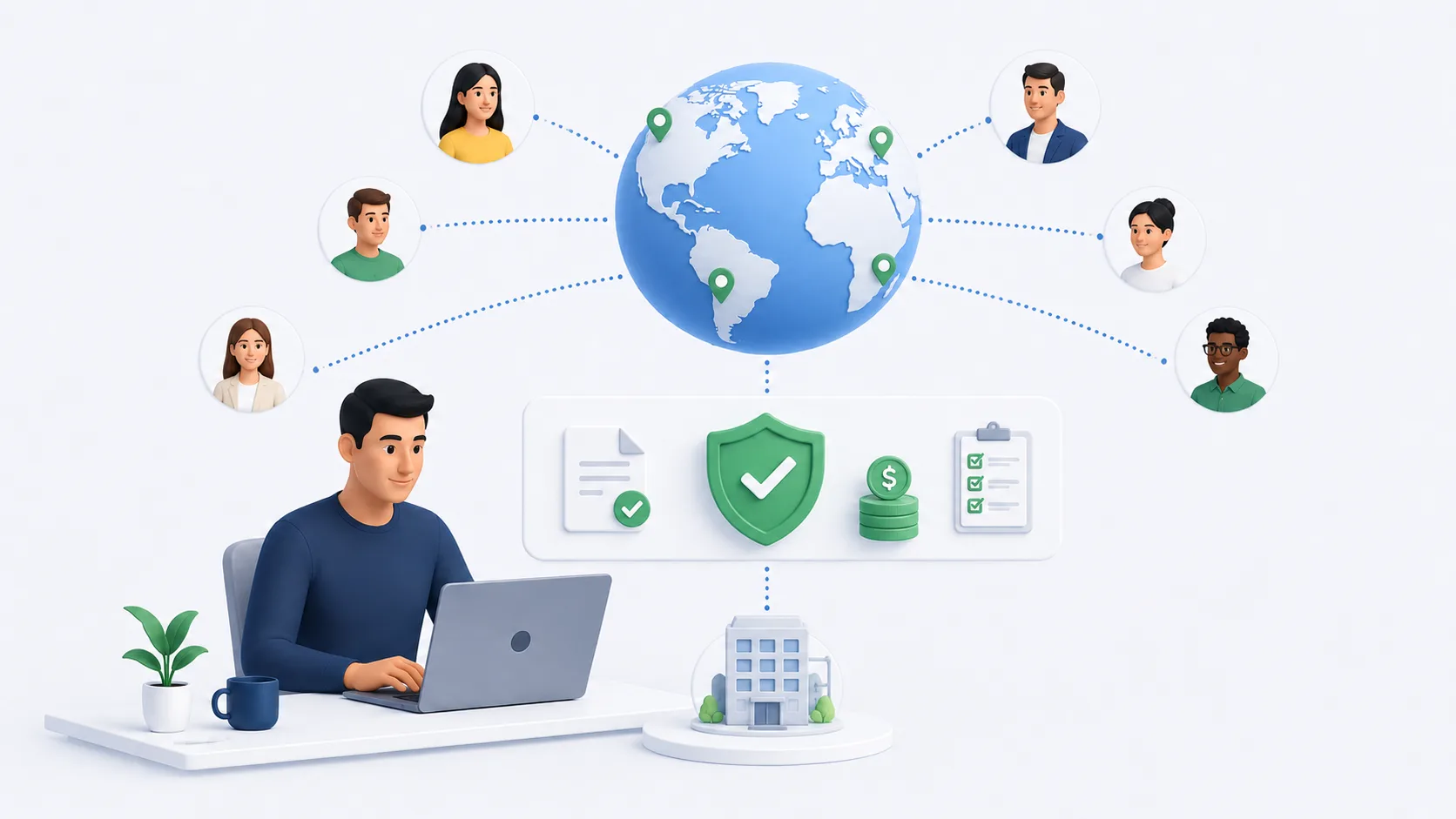

Expanding your business internationally is no longer reserved for large enterprises. Startups, scale-ups, and established businesses alike are building global teams to access top talent, reduce hiring costs, and enter new markets faster.
However, hiring employees in another country comes with legal, financial, and administrative responsibilities. Every country has its own employment laws, tax regulations, payroll requirements, statutory benefits, and compliance standards. Setting up a legal entity in each country can take months and involve significant costs before you even hire your first employee.
This is where an Employer of Record (EOR) becomes invaluable.
An Employer of Record enables companies to hire employees legally in countries where they don’t have a registered business entity. Instead of navigating complex employment regulations independently, businesses can partner with an EOR provider that becomes the legal employer on paper while the company continues to manage the employee’s day-to-day responsibilities.
In this guide, we’ll explain everything you need to know about Employer of Record services, how they work, their benefits, and why they’re becoming the preferred solution for global hiring.
What Is an Employer of Record (EOR)?
An Employer of Record (EOR) is a third-party organization that legally employs workers on behalf of another company.
While your business manages the employee’s daily work, performance, goals, and reporting structure, the EOR handles all legal employment responsibilities.
These responsibilities typically include:
- Employment contracts
- Payroll processing
- Income tax deductions
- Social security contributions
- Employee benefits
- Leave management
- Employment compliance
- Labor law adherence
- HR administration
- Employee onboarding
- Offboarding and termination procedures
Simply put:
You choose the employee.
The EOR legally hires them.
You manage their work.
This model allows businesses to hire globally without establishing a legal entity in every country they operate in.
Why Are Employer of Record Services Becoming So Popular?
Today’s workforce is more global than ever.
Remote work has transformed hiring, allowing businesses to recruit the best talent regardless of location. A company headquartered in the United States can hire developers in India, designers in Brazil, marketers in Singapore, or sales professionals in Germany—all without relocating employees.
However, international hiring introduces several challenges.
Every country has unique:
- Labor laws
- Payroll regulations
- Tax requirements
- Notice periods
- Employee rights
- Insurance obligations
- Paid leave policies
- Employment documentation
Missing even one legal requirement can result in penalties, delayed hiring, or compliance issues.
Employer of Record providers remove these complexities, allowing businesses to expand confidently while remaining compliant with local employment laws.
How Does an Employer of Record Work?
The EOR process is designed to simplify global hiring while ensuring complete legal compliance.
Step 1: You Find the Talent
Your company identifies the ideal candidate through your recruitment process.
The employee interviews directly with your team and receives an offer from your company.
Step 2: The EOR Becomes the Legal Employer
Once the candidate accepts the offer, the Employer of Record prepares legally compliant employment contracts based on local labor laws.
The employee is officially employed by the EOR in their country.
Step 3: Employee Onboarding
The EOR manages:
- Employment agreements
- Identity verification
- Government registrations
- Payroll setup
- Benefits enrollment
- Tax documentation
This ensures the employee is fully compliant before beginning work.
Step 4: Payroll and Benefits
Every month, the Employer of Record processes:
- Salaries
- Bonuses
- Taxes
- Pension contributions
- Insurance
- Statutory benefits
- Leave balances
Employees receive accurate, on-time payments without your HR team needing to navigate local payroll systems.
Step 5: Ongoing Compliance
Employment laws change frequently.
The EOR continuously monitors changes in:
- Minimum wages
- Tax regulations
- Employment legislation
- Holiday policies
- Social contributions
- Mandatory benefits
This minimizes legal risk for your business.
Who Is the Employee’s Actual Employer?
One of the most common questions businesses ask is whether they lose control over their employees.
The answer is no.
Here’s how responsibilities are divided:
Your Company
- Assigns daily work
- Conducts performance reviews
- Sets goals
- Approves promotions
- Defines company culture
- Manages projects
- Determines compensation strategy
Employer of Record
- Legal employment
- Payroll
- Compliance
- Benefits administration
- HR documentation
- Tax filing
- Employment contracts
Think of the Employer of Record as your legal employment partner, while you remain the operational manager.
What Services Does an Employer of Record Provide?
Although services vary between providers, most EOR solutions include:
Payroll Management
Payroll involves much more than simply transferring salaries.
The EOR calculates:
- Gross salary
- Net salary
- Income tax
- Employer taxes
- Pension contributions
- Statutory deductions
- Bonuses
- Reimbursements
This ensures every employee is paid accurately and on time.
HR Compliance
Every country has different employment regulations.
An Employer of Record helps ensure compliance with:
- Working hours
- Overtime rules
- Leave policies
- Termination procedures
- Probation periods
- Notice requirements
- Employment classifications
Employee Benefits
Competitive benefits are essential for attracting and retaining talent.
EOR providers manage:
- Health insurance
- Life insurance
- Disability coverage
- Retirement plans
- Paid leave
- Maternity and paternity benefits
- Local statutory benefits
Employment Contracts
Employment agreements must comply with local regulations.
An Employer of Record prepares legally compliant contracts tailored to each country’s employment laws.
Tax Administration
Managing taxes internationally can quickly become overwhelming.
The EOR handles:
- Payroll tax
- Employer contributions
- Income tax withholding
- Government reporting
- Tax documentation
This reduces administrative burden while ensuring compliance.
Employee Onboarding
The onboarding experience significantly impacts employee satisfaction.
An Employer of Record streamlines onboarding by preparing employment documents, collecting required information, registering employees with local authorities, and ensuring they can begin work without delays.
Leave Management
Each country has unique leave requirements.
An Employer of Record administers:
- Annual leave
- Sick leave
- Maternity leave
- Paternity leave
- Public holidays
- Emergency leave
This ensures your business remains compliant while employees receive the benefits they are legally entitled to.
What Are the Benefits of Using an Employer of Record?
Partnering with an Employer of Record offers advantages beyond legal compliance. It enables businesses to expand globally while reducing administrative complexity and operational costs.
Faster Global Hiring
Setting up a local entity in a new country can take several months. With an EOR, businesses can hire talent in days instead of waiting for company registration, banking, and tax approvals.
This speed is especially valuable for startups and growing companies that need to build teams quickly.
Reduced Administrative Burden
Managing payroll, taxes, employee documentation, statutory benefits, and labor law compliance across multiple countries can overwhelm internal HR teams.
An Employer of Record takes ownership of these responsibilities, allowing your team to focus on recruitment, employee engagement, and business growth.
Lower Expansion Costs
Creating a legal entity involves incorporation fees, legal support, accounting services, ongoing compliance, and local administration.
Using an EOR eliminates these upfront costs while giving businesses the flexibility to test new markets before committing to permanent operations.
Better Compliance
Employment laws differ from one country to another and are updated regularly. A reliable EOR monitors legal changes and ensures employment practices remain compliant, reducing the risk of penalties or legal disputes.
Improved Employee Experience
Employees benefit from locally compliant contracts, timely payroll, statutory benefits, insurance coverage, and structured onboarding. This creates a positive employment experience and supports long-term retention.
Access to Global Talent
Instead of limiting recruitment to locations where your business has offices, an Employer of Record enables you to hire skilled professionals wherever they are based.
Whether you’re looking for software engineers, designers, marketers, finance specialists, or customer support teams, an EOR allows you to build a truly global workforce.
Part 1 of the blog concludes here. Continue with Part 2 to cover when businesses should use an EOR, EOR vs PEO, common misconceptions, FAQs, conclusion, and a strong CTA.
When Should Your Business Use an Employer of Record?
While an Employer of Record can benefit organizations of all sizes, there are certain situations where partnering with an EOR makes strategic sense.
You’re Expanding Into a New Country
Testing a new market can be expensive if you first need to establish a legal entity. An EOR allows you to hire local employees immediately, helping you evaluate market opportunities without making a long-term financial commitment.
You’re Building a Remote Team
Remote work has changed how companies hire. Instead of restricting recruitment to a single city or country, businesses can build distributed teams across the globe. An Employer of Record makes it possible to hire remote employees legally while ensuring compliance with local employment laws.
You Need to Hire Quickly
Business opportunities often require immediate hiring. Whether you’re onboarding a sales representative to support a new market or hiring engineers for a product launch, an EOR helps reduce delays by handling employment contracts, payroll setup, and compliance from day one.
You Want to Reduce Compliance Risk
International employment laws are complex and frequently updated. Rather than keeping track of changing tax regulations, statutory benefits, and labor laws in multiple countries, businesses can rely on an EOR to manage these responsibilities.
You Don’t Want the Cost of Setting Up a Local Entity
Opening a subsidiary or branch office requires legal registration, accounting support, tax filings, banking relationships, and ongoing compliance. For companies hiring only a few employees in a new market, this investment may not be practical. An Employer of Record offers a more cost-effective alternative.
Employer of Record vs. PEO: What’s the Difference?
Employer of Record (EOR) and Professional Employer Organization (PEO) are often confused, but they serve different purposes.
Employer of Record (EOR) | Professional Employer Organization (PEO) |
Becomes the legal employer | Operates under a co-employment model |
No local entity required | Requires your business to have a legal entity |
Handles local employment compliance | Shares HR responsibilities with your company |
Ideal for international hiring | Best suited for domestic HR support |
Manages payroll, taxes, benefits, and employment contracts | Assists with HR administration and employee benefits |
If you’re hiring in a country where you don’t have a registered business, an Employer of Record is typically the right solution.
Common Misconceptions About Employer of Record Services
“We’ll Lose Control of Our Employees”
Not at all. Your company remains responsible for assigning work, managing performance, setting goals, approving promotions, and leading the employee’s day-to-day activities. The EOR simply handles the legal employment responsibilities.
“Employer of Record Services Are Only for Large Enterprises”
Businesses of every size use EOR services. Startups often rely on an EOR to expand internationally without investing heavily in legal infrastructure, while larger organizations use them to enter new markets more efficiently.
“Setting Up Our Own Entity Is Always Better”
Creating a local entity makes sense when a company plans significant long-term operations in a country. However, if you’re hiring a small team or exploring a new market, an EOR is often faster, more flexible, and more cost-effective.
“An EOR Is Only for Remote Employees”
Employer of Record services support both remote and on-site employees. Whether your team works from home, a coworking space, or a physical office, an EOR ensures they are employed legally and compliantly.
How to Choose the Right Employer of Record
Not all EOR providers offer the same level of service. Before choosing a partner, consider the following:
- Coverage across the countries where you plan to hire
- Strong expertise in local employment laws and compliance
- Transparent pricing with no hidden costs
- Reliable payroll processing and tax administration
- Comprehensive employee benefits
- Responsive HR and customer support
- Smooth onboarding experience
- Secure handling of employee data
- Scalable solutions for growing teams
The right Employer of Record should feel like an extension of your HR team, helping you expand with confidence while minimizing administrative work.
Frequently Asked Questions
What is an Employer of Record?
An Employer of Record (EOR) is a third-party organization that legally employs workers on behalf of another company while managing payroll, taxes, employee benefits, and compliance with local labor laws.
Is an Employer of Record legal?
Yes. Employer of Record services are a widely accepted and legally compliant solution for hiring employees internationally, provided the EOR follows the employment regulations of the respective country.
Can an Employer of Record hire employees in multiple countries?
Yes. Many EOR providers support hiring across dozens or even hundreds of countries, making global expansion significantly easier for businesses.
Does an Employer of Record manage payroll?
Absolutely. Payroll processing is one of the core services provided by an EOR. This includes salary payments, tax deductions, statutory contributions, bonuses, and government reporting.
Who manages the employee’s day-to-day work?
Your company does. The EOR is responsible for legal employment and HR administration, while you oversee daily tasks, performance management, and business objectives.
Is an Employer of Record suitable for startups?
Yes. Startups often use Employer of Record services to hire global talent quickly without the cost and complexity of establishing foreign subsidiaries.
Final Thoughts
Hiring internationally offers incredible opportunities, but it also introduces legal, financial, and administrative challenges. Understanding local labor laws, managing payroll across different countries, and ensuring ongoing compliance can quickly become overwhelming—especially for growing businesses.
An Employer of Record simplifies this entire process. By handling employment contracts, payroll, taxes, statutory benefits, compliance, and HR administration, an EOR enables businesses to build global teams without establishing local entities.
Whether you’re hiring your first international employee or expanding across multiple countries, partnering with a trusted Employer of Record allows you to focus on innovation, growth, and building exceptional teams while leaving the complexities of global employment to experienced professionals.
Ready to Hire Globally with Confidence?
ezyHire’s Employer of Record services help businesses hire, onboard, and manage employees in 130+ countries without the need to establish local entities. From payroll and tax compliance to employee benefits and onboarding, we take care of every aspect of international employment so you can focus on growing your business.
Looking to build your global team? Get in touch with ezyHire today and discover how effortless international hiring can be.