
Introduction
The digital transformation of business operations has changed how organizations verify identities. Hiring, onboarding, and workforce management increasingly happen online, creating new security challenges.
Digital identity verification allows businesses to confirm identities remotely while maintaining strong security controls.
Companies across industries now rely on digital verification technologies to protect themselves against fraud and ensure trustworthy interactions.
The digital transformation of business operations has changed how organizations verify identities. Hiring, onboarding, and workforce management increasingly happen online, creating new security challenges.
Digital identity verification allows businesses to confirm identities remotely while maintaining strong security controls.
Companies across industries now rely on digital verification technologies to protect themselves against fraud and ensure trustworthy interactions.
The digital transformation of business operations has changed how organizations verify identities. Hiring, onboarding, and workforce management increasingly happen online, creating new security challenges.
Digital identity verification allows businesses to confirm identities remotely while maintaining strong security controls.
Companies across industries now rely on digital verification technologies to protect themselves against fraud and ensure trustworthy interactions.
The digital transformation of business operations has changed how organizations verify identities. Hiring, onboarding, and workforce management increasingly happen online, creating new security challenges.
Digital identity verification allows businesses to confirm identities remotely while maintaining strong security controls.
Companies across industries now rely on digital verification technologies to protect themselves against fraud and ensure trustworthy interactions.
What Is Digital Identity Verification
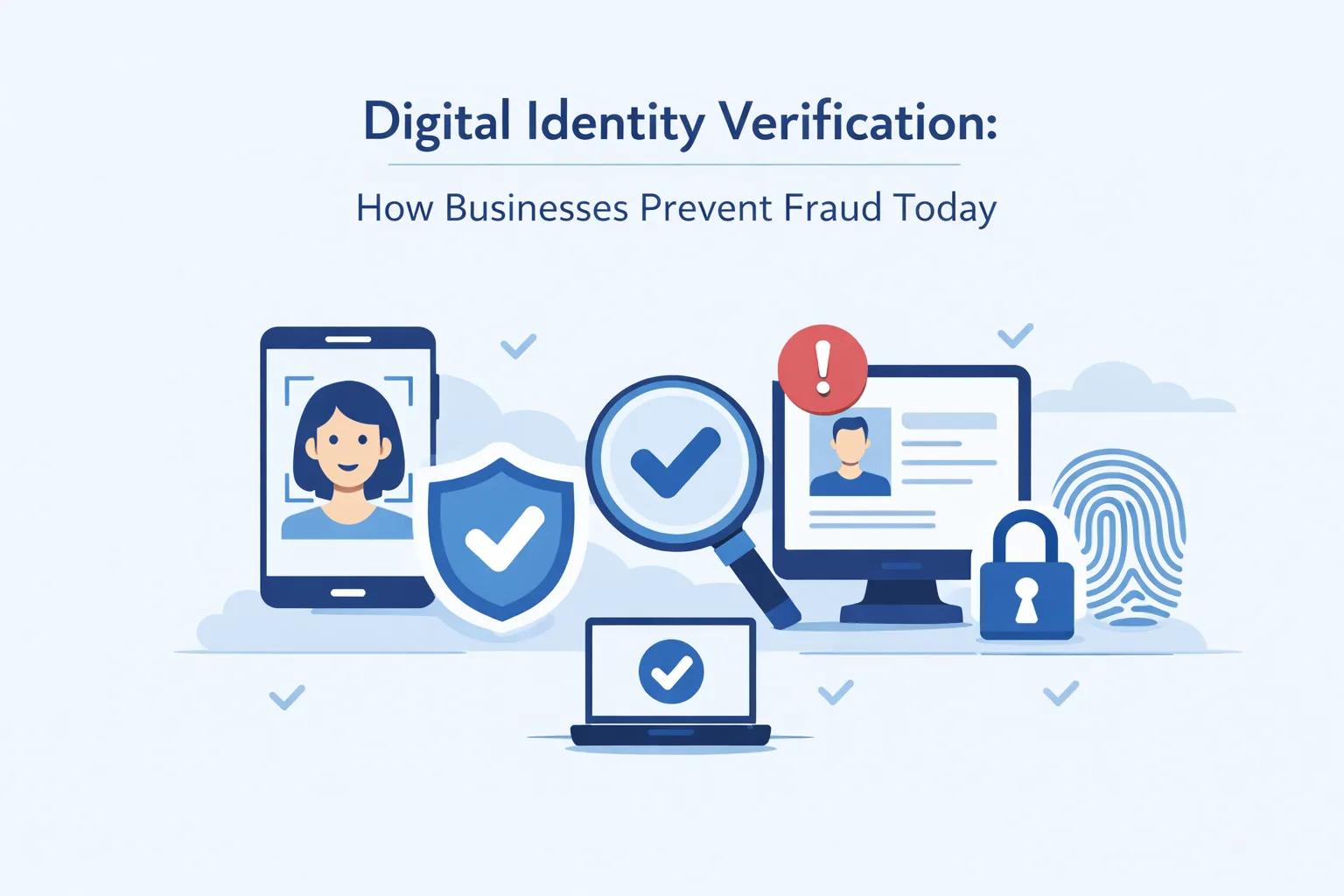
Digital identity verification is the process of confirming a person’s identity using online technologies.
These systems analyze identity documents, biometric data, and trusted databases to validate identities.
Unlike traditional identity checks that require physical presence, digital verification systems allow companies to authenticate identities remotely.
Digital identity verification is the process of confirming a person’s identity using online technologies.
These systems analyze identity documents, biometric data, and trusted databases to validate identities.
Unlike traditional identity checks that require physical presence, digital verification systems allow companies to authenticate identities remotely.
Digital identity verification is the process of confirming a person’s identity using online technologies.
These systems analyze identity documents, biometric data, and trusted databases to validate identities.
Unlike traditional identity checks that require physical presence, digital verification systems allow companies to authenticate identities remotely.
Digital identity verification is the process of confirming a person’s identity using online technologies.
These systems analyze identity documents, biometric data, and trusted databases to validate identities.
Unlike traditional identity checks that require physical presence, digital verification systems allow companies to authenticate identities remotely.
Key Technologies Used
Digital identity verification platforms rely on several technologies including optical character recognition, artificial intelligence document analysis, facial recognition, and machine learning fraud detection.
These technologies allow systems to detect forged documents and confirm that identity information is authentic.
Digital identity verification platforms rely on several technologies including optical character recognition, artificial intelligence document analysis, facial recognition, and machine learning fraud detection.
These technologies allow systems to detect forged documents and confirm that identity information is authentic.
Digital identity verification platforms rely on several technologies including optical character recognition, artificial intelligence document analysis, facial recognition, and machine learning fraud detection.
These technologies allow systems to detect forged documents and confirm that identity information is authentic.
Digital identity verification platforms rely on several technologies including optical character recognition, artificial intelligence document analysis, facial recognition, and machine learning fraud detection.
These technologies allow systems to detect forged documents and confirm that identity information is authentic.
Why Businesses Use Digital Verification
Organizations adopt digital identity verification because it improves efficiency and security.
Manual verification processes can be slow and prone to human error. Digital systems automate identity checks and produce results quickly.
These systems also scale easily, allowing companies to verify thousands of identities during hiring campaigns.
Organizations adopt digital identity verification because it improves efficiency and security.
Manual verification processes can be slow and prone to human error. Digital systems automate identity checks and produce results quickly.
These systems also scale easily, allowing companies to verify thousands of identities during hiring campaigns.
Organizations adopt digital identity verification because it improves efficiency and security.
Manual verification processes can be slow and prone to human error. Digital systems automate identity checks and produce results quickly.
These systems also scale easily, allowing companies to verify thousands of identities during hiring campaigns.
Organizations adopt digital identity verification because it improves efficiency and security.
Manual verification processes can be slow and prone to human error. Digital systems automate identity checks and produce results quickly.
These systems also scale easily, allowing companies to verify thousands of identities during hiring campaigns.
Industry Applications
Digital identity verification is widely used in industries such as fintech, recruitment, gig economy platforms, and enterprise hiring.
These industries often deal with remote users and require reliable methods of confirming identities online.
Digital identity verification is widely used in industries such as fintech, recruitment, gig economy platforms, and enterprise hiring.
These industries often deal with remote users and require reliable methods of confirming identities online.
Digital identity verification is widely used in industries such as fintech, recruitment, gig economy platforms, and enterprise hiring.
These industries often deal with remote users and require reliable methods of confirming identities online.
Digital identity verification is widely used in industries such as fintech, recruitment, gig economy platforms, and enterprise hiring.
These industries often deal with remote users and require reliable methods of confirming identities online.
Conclusion
Digital identity verification has become a fundamental component of secure digital operations. Organizations that adopt advanced verification technologies will be better equipped to prevent fraud and maintain trust.
Digital identity verification has become a fundamental component of secure digital operations. Organizations that adopt advanced verification technologies will be better equipped to prevent fraud and maintain trust.
Digital identity verification has become a fundamental component of secure digital operations. Organizations that adopt advanced verification technologies will be better equipped to prevent fraud and maintain trust.
Digital identity verification has become a fundamental component of secure digital operations. Organizations that adopt advanced verification technologies will be better equipped to prevent fraud and maintain trust.